Somebody asks you, last minute, to feed a fall reunion, a church dinner or the holiday party, and the number is 150. Big cooks are won before the fire is lit: do the math, prep days ahead, cook in bulk, then let a hot hold buy you the time. Here is the plan from Mr. B’s own 150-plate cook.
The 150-Plate Sheet
Here is the buy list for 100 to 150 people, and the check that tells you each item is ready.
| What | For 150 plates | The check |
|---|---|---|
| Pork butt | Ten boneless Boston butts, about 84 lb total, roughly 8 lb each (they came two to a 15–16 lb pack). | Pork shoulder is safe at 145°F with a 3-minute rest. For pulling, it is cooked well past that, to about 195–205°F, until a probe slides in like butter. |
| Pulled yield | In Mr. B’s cooks, pork butt loses roughly 40 to 50% of its raw weight by the time it’s pulled, so plan on about half. | Half of 84 lb raw is about 42 lb pulled. |
| St. Louis ribs | 15 slabs, membranes pulled, cut into bones before cooking. | Pork ribs are safe at 145°F with a 3-minute rest. Cook them past that until they’re tender and bend with a crack in the bark. |
| Chicken wings | 80 lb. | Chicken wings are done at 165°F internal. Check several wings from each pan. |
| Rub | A heavy coat on every piece. | Buy extra so you can top off during the cook. |
Plan your own crowd cook with the Pit Tools at backyardbbqr.com/tools/: the Crowd Calculator and the Cook Timeline Planner are open now. Next: keeping it good until the line opens.
If you’re looking, you ain’t cooking.Mr. B, from the episode
What They Don’t Tell You
Three things decide a 150-plate cook, and none of them is the fire.
- The days ahead are the cook. The butts brine for 24 hours in iced bins, then get tied, coated in mustard and a heavy rub, and refrigerated another 24. When the pit is lit, the work is done.
- Cut the ribs before they cook. Fifteen whole slabs won’t fit in a home refrigerator or slice fast at service. Pull the membranes, cut into bones, season, and store them in containers overnight. Seasoned raw meat goes back in the refrigerator (40°F or colder), covered, below ready-to-eat food.
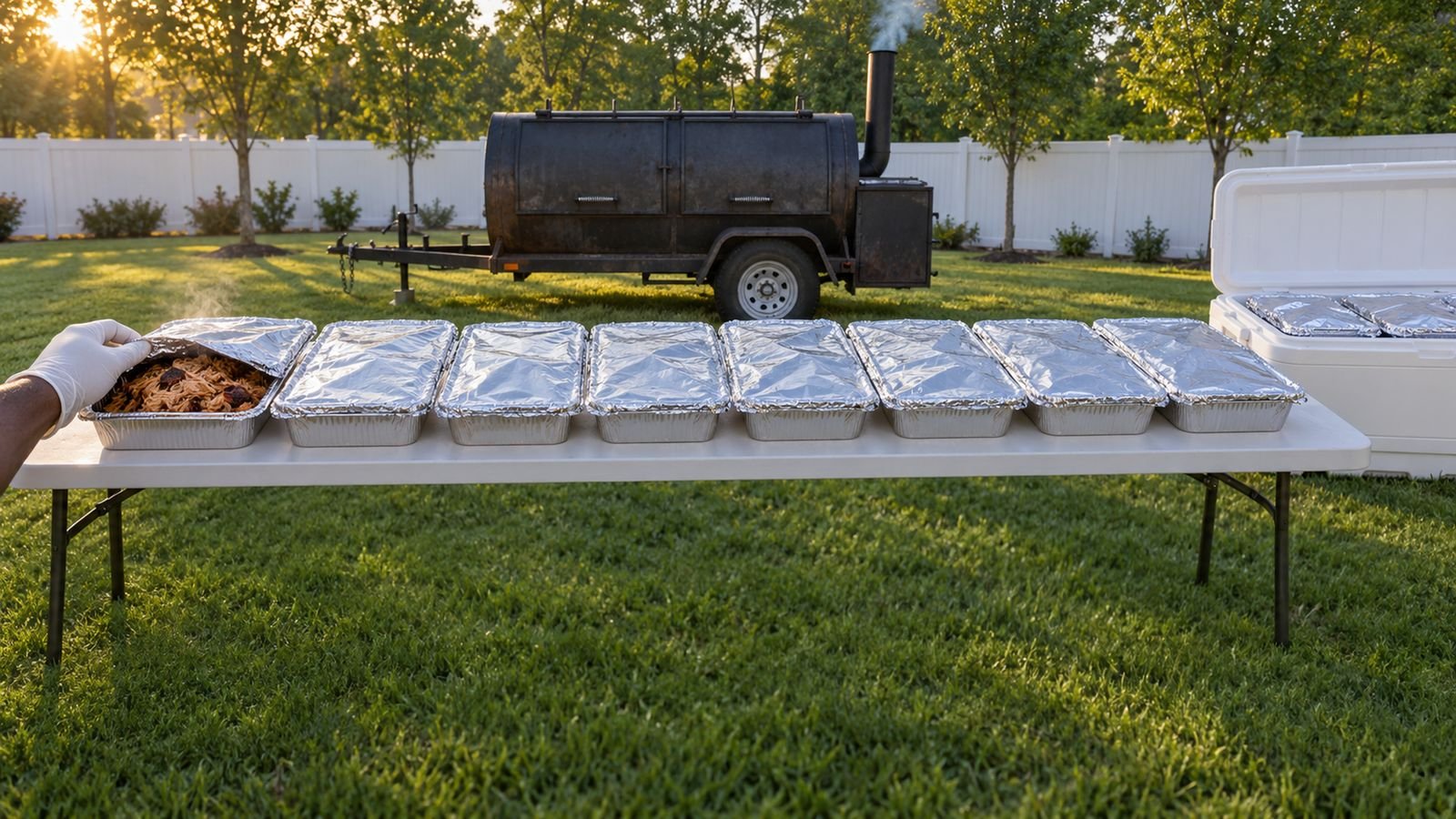
- The cooler is your buffer, not its label. Foiled pans stacked in an insulated cooler held the pork about 6 hours, overnight to the morning pull. A cooler’s ice rating says nothing about hot food. A well-insulated cooler slows heat loss. Check that the meat stays at or above 140°F throughout the hold.
When I cook for other people, I cook the same recipe every time. I test new ideas on small cooks, not on 150 guests. And don’t skimp on seasoning. Flavor costs a little, and you’re charging for it.
Hold hot. Verify the meat remains at or above 140°F throughout the hold. Anything that drops into the 40–140°F Danger Zone for more than 2 hours gets thrown out.
Brine cold. Brining meat stays at 40°F or colder the whole time. Out of the fridge, keep it packed in ice, check the brine with a thermometer, and add ice before it drifts above 40°F.
Pat dry, never rinse. Remove the butts from the brine, discard the brine, and pat them completely dry. Don’t rinse raw meat; splashing spreads bacteria.
Pork shoulder is safe at 145°F with a 3-minute rest.
Then come the three mistakes.
Three Mistakes
Each of these costs more time than it saves.
- Cooking to the clock. Cook to temperature and tenderness, not the clock. Times change with the cooker, the weather and how full the pit is.
- Running the sides yourself. Hand them to someone you trust.
- Topping off the serving pans. Swap in fresh pans instead of topping off old ones, and throw out anything that sat out more than 2 hours (1 hour above 90°F).
Skip those three and the checklist carries the day.
The Big-Cook Checklist
Run it from the store to the serving line.
Tick the last box and the hard part is behind you.
The Big Cook System
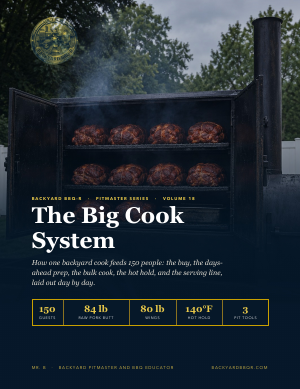
This sheet plans one 150-plate cook. The Big Cook System adds the day-by-day timeline, buy lists for 50, 100 and 150, pit loading, a hot-hold log and service-line management for the holiday party season. Watch the whole cook in this week’s episode.
Get the Big Cook System →Watch the Episode
Mr. B
Cooking backyard BBQ since 1996. Every safety temperature on this page is a USDA number; everything else is thirty years at the pit.
Questions on your cook? Join the free Backyard BBQ-R Pitmasters community and post it.
— Mr. B, Backyard BBQ-R