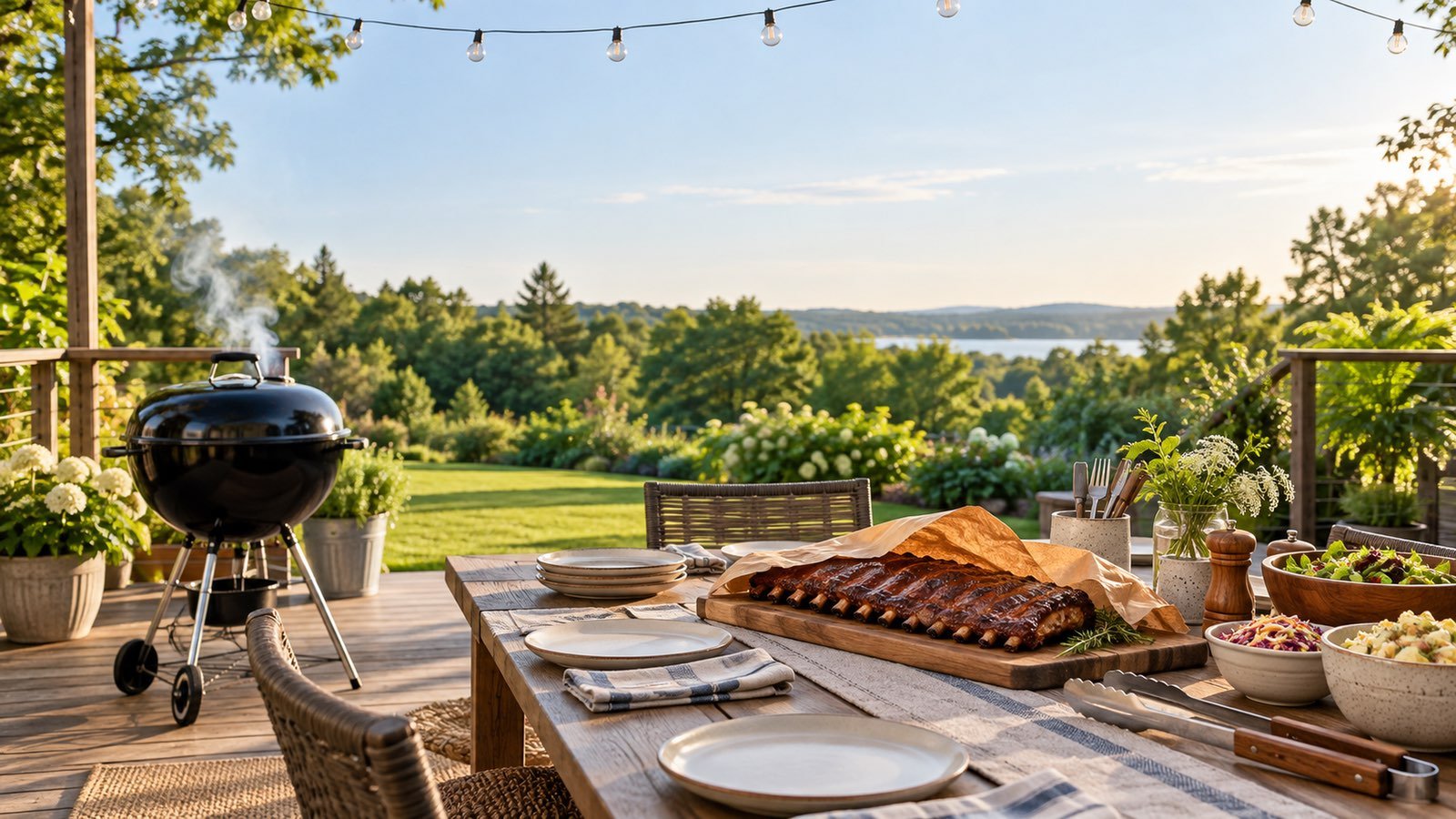
Pick the serve time first and count backward from the plate. That night-before habit lets the host sit down and eat.
The 4 PM Serve Countdown
Say the neighborhood is coming at four. Every row below is counted from that plate; if you serve at five, shift every row by an hour.
| When | What’s happening | The check |
|---|---|---|
| Night before | Prep sheet written, groceries in, big-cut start times worked out. | Use your past cooks as a starting estimate. Thickness, pit temperature, weather and wrapping change the finish. Build a buffer and a measured 140°F-or-warmer hot hold or prompt cooling route. |
| Morning | Big cuts cooking. Chicken and burgers prepped separately, hands and tools washed between raw items. | Gloves do not replace washing your hands. |
| 2 hours out | Check whether the grate and service line are ready for complete chicken batches. Cook each piece to 165°F before removal. | Never take chicken off half-done to finish later. |
| 1 hour out | Check the actual big-cut finish and holding temperature. Start burgers near service and cook to 160°F. | Thermometer in the thickest part, not clear juices. |
| 3 PM | Preheat serving equipment and verify food entering a hot hold stays at 140°F or warmer. | Check the hold with a thermometer, not by feel. |
| 4 PM and after | Serve from a verified hot hold or fresh batch. Move leftovers into shallow containers and refrigerate promptly once food leaves temperature control; use the one-hour limit above 90°F. | Use within 3–4 days, or freeze within that window. Reheat leftovers to 165°F. |
Big cuts take the flexible hot-hold slot; chicken and burgers finish close to service.
We’re going to talk about how to utilize your grill space and planning your menu around that.Mr. B, from the episode
What Nobody Tells You About the Cool Zone
Bank the coals on one side. Sear hot, then finish gently over the empty side with the lid down. Three checks matter:
- The cool zone is not a judge. It finishes food gently, but it does not judge doneness. Every piece still reaches its safe minimum temperature, confirmed with a thermometer, before it leaves the grill.
- “The juices run clear” is not a thermometer. I have pulled chicken that looked done and was pink in the middle. Color and clear juices are not reliable indicators; use a thermometer in the thickest part of every piece.
- Serving is a cooking step. Food that came off perfectly and then sat out for two hours is the problem people remember. Hot food is held at 140°F or warmer, and you check the food, not the tray.
I wear gloves with raw chicken because they strip off fast. And I still wash my hands after they come off. You are responsible for keeping your guests safe, and people talk. Good and bad.
Never partially cook meat or poultry and finish it later. Once chicken goes on, it stays on until it reaches 165°F.
If big cuts finish early, verify 140°F or warmer throughout a hot hold, or cool promptly. Track the time perishable food spends outside temperature control; refrigerate within two hours, or one hour above 90°F.
Where the Day Goes Wrong
- Chicken on, off, back on. The safety clock kept running while it sat. Once chicken goes on, it stays on until it reads 165°F. Chicken first, burgers last.
- Everything over the fire while you mingle. That is how ribs and chicken go black. Sear over the coals, move to the cool side, keep the lid down between moves.
- Leftovers on the stove overnight. Pan it up before you sit down for the last time: shallow, covered containers, in the fridge within 2 hours. The clamshells are for sending plates home.
Every one of those was decided before the party started, which is why the checklist is mostly things you do on Saturday.
The Cook-Day Checklist

When You’re Feeding Thirty
This page runs one cook day. The Crowd Cook Playbook adds capacity planning, a flexible service plan, measured hot holding, a hot-weather fallback, and three printable pit tools.
Get the Playbook →Watch Ep. 13
Mr. B
Cooking backyard BBQ since 1996. These guides turn real cooks into practical steps you can use.
— Mr. B, Backyard BBQ-R