Smoker Setup Lesson
Kamado Setup
Kamado grills hold temperature exceptionally well but can overshoot fast if you are not careful. Learn fuel loading, heat-up timing, and vent management for low-and-slow and direct cooks.
LevelIntermediate
Learning PathSmoker Setup
Lesson15 of 24
Key Concepts
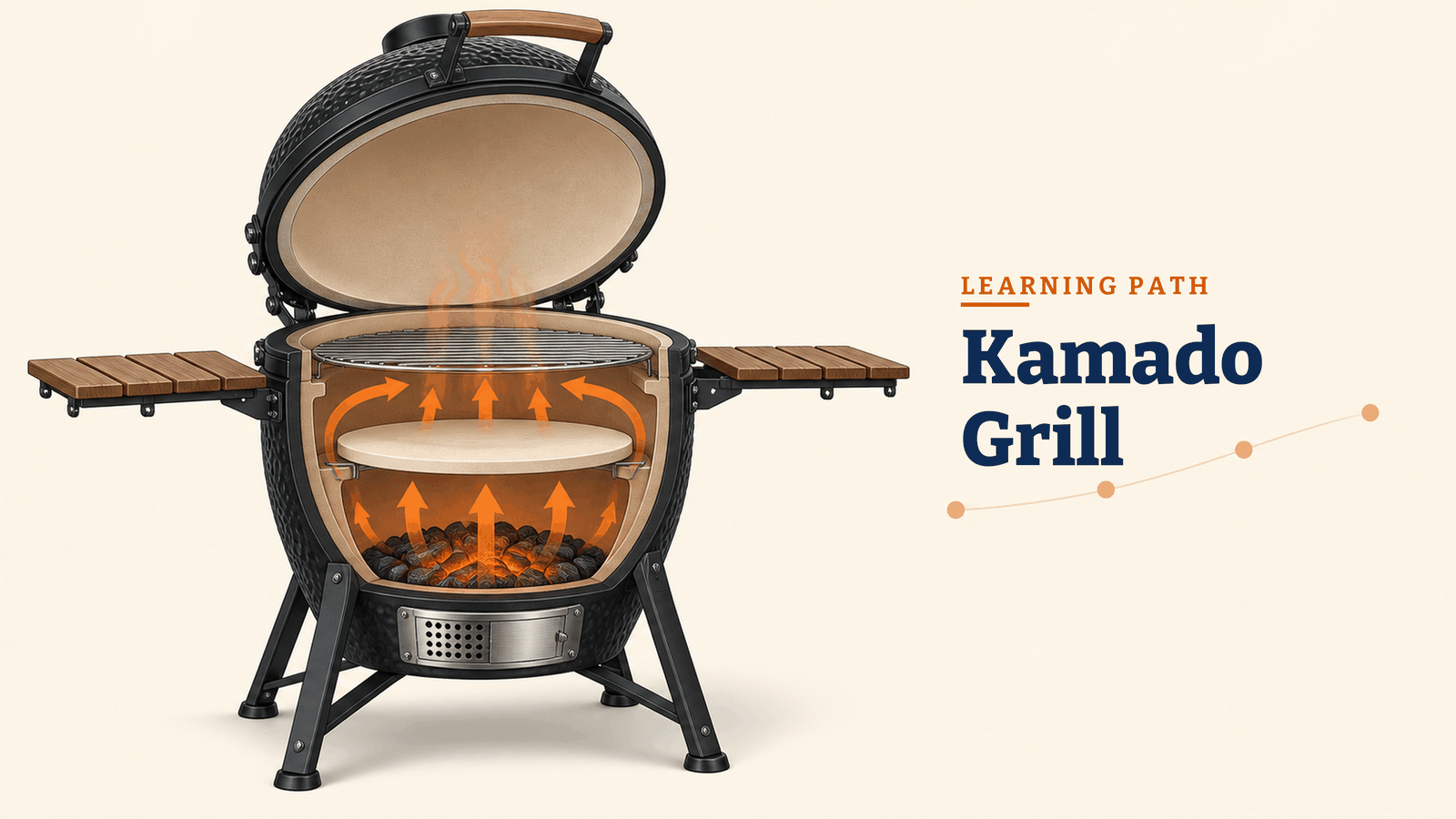
- Kamado thermal mass: ceramic walls hold heat and make temp stable but slow to change
- Fuel loading: fill the firebox relative to cook length — more for long cooks, less for short ones
- Startup: light the center, let it establish slowly — do not rush with a full chimney
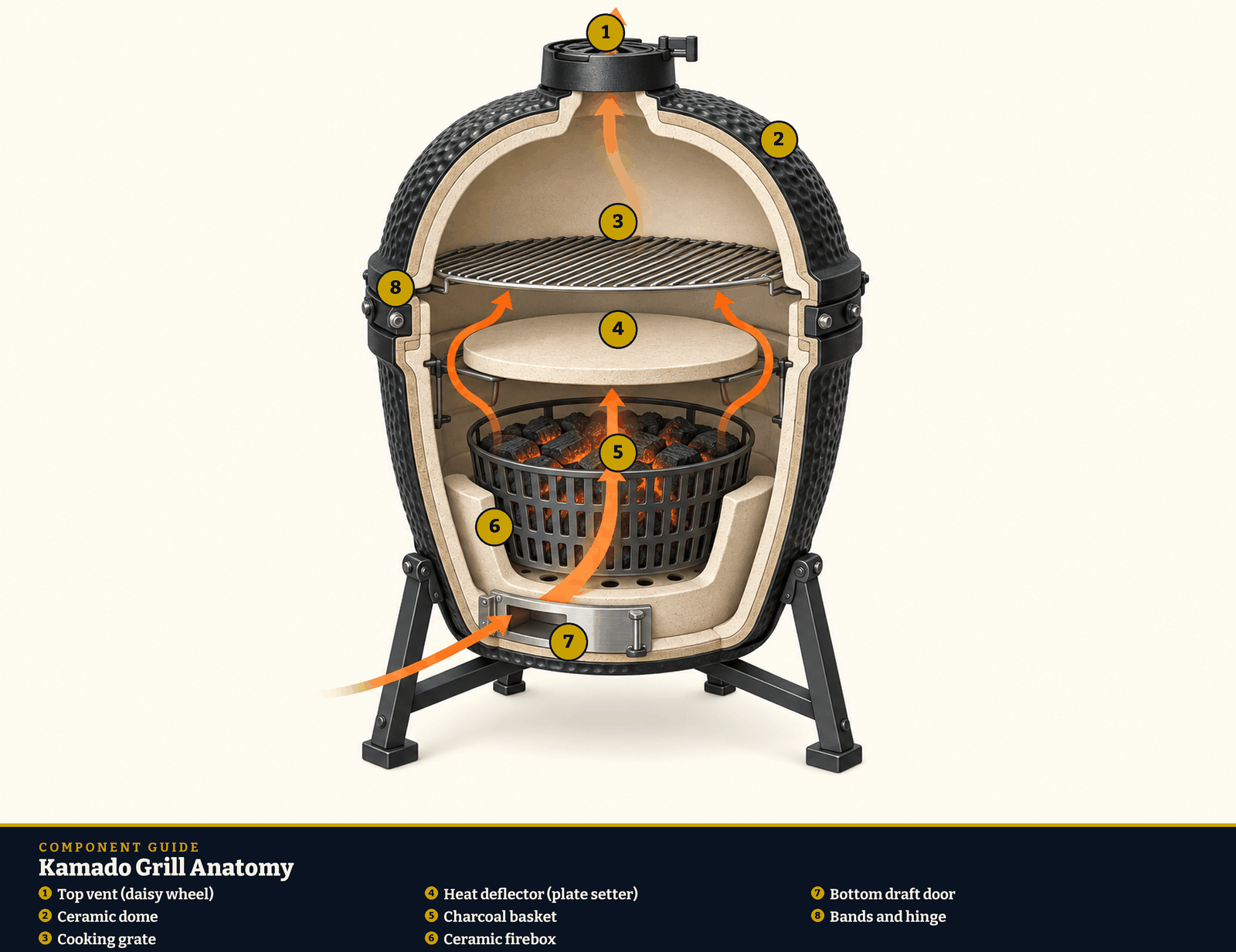
- Deflector plate: used for indirect cooking to shield meat from direct radiant heat below
- Overshoot: what happens when a kamado runs past target temp and how to prevent it
Put It Into Practice
- Fill the firebox with lump charcoal for your cook length. Half-full for short cooks; full for long low-and-slow.
- Add wood chunks to the charcoal before lighting — buried slightly so they ignite progressively during the cook.
- Light the center of the charcoal pile with a fire starter. Do not use a full chimney. Kamados heat fast and overshoot is easy.
- Open all vents fully and let the fire establish for 10-15 minutes, then slowly close down toward your target vent position.
- For low-and-slow at 225–250°F: top vent barely cracked, bottom vent at 10-15% open.
- Install the deflector plate before adding meat for all indirect cooks.
- If the pit overshoots: do not close all vents. Close to 10% and wait. Fully closing a hot kamado smothers the fire and causes dirty smoke when you reopen.
Mr. B's Pitmaster Note
The biggest kamado mistake is trying to bring temp down after it has overshot. A kamado that ran to 300°F when you wanted 250°F is very slow to drop because of the heat stored in the ceramic walls. Close the vents before you hit target temp — not after.
Use your equipment manufacturer's instructions, keep the cooker outdoors on a stable noncombustible surface, and verify food temperatures with a calibrated thermometer.