Smoker Setup Lesson
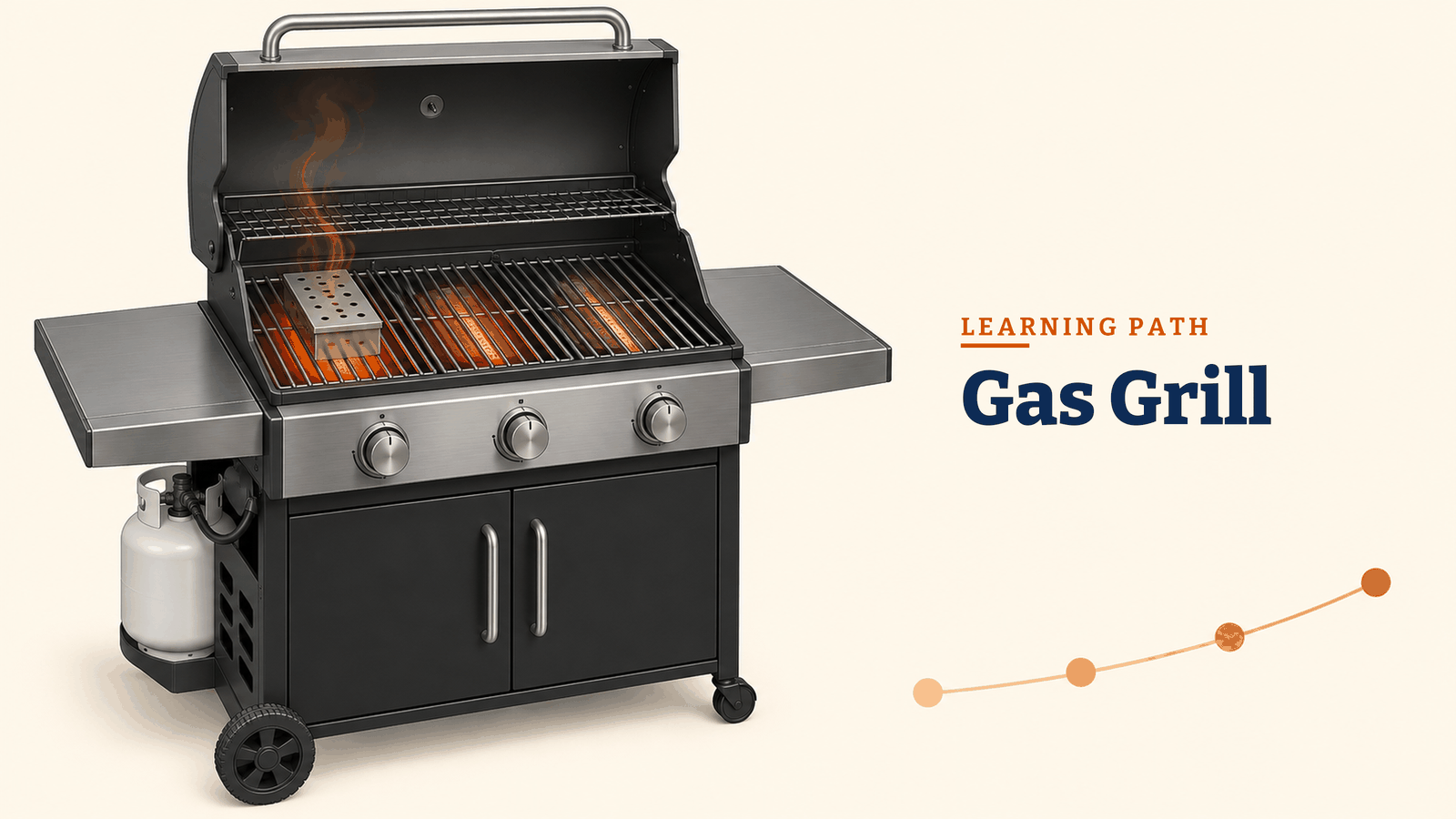
Gas Grill Setup for Smoking
You do not need a dedicated smoker to produce real smoke flavor. A two-burner or three-burner gas grill can be configured for indirect smoking with the right setup.
LevelBeginner
Learning PathSmoker Setup
Lesson16 of 24
Key Concepts
- Gas grills are not ideal smokers but can produce usable smoke flavor with the right technique
- Two-zone gas setup: only one side of burners lit, food on the unlit side
- Smoke delivery: wood chips in a foil pouch or a cast iron smoker box placed over a lit burner
- Temperature limitation: most gas grills run too hot on low — 300–350°F is common instead of 225°F
- Lid seal: gas grill lids are less airtight than dedicated smokers and lose smoke faster
Put It Into Practice
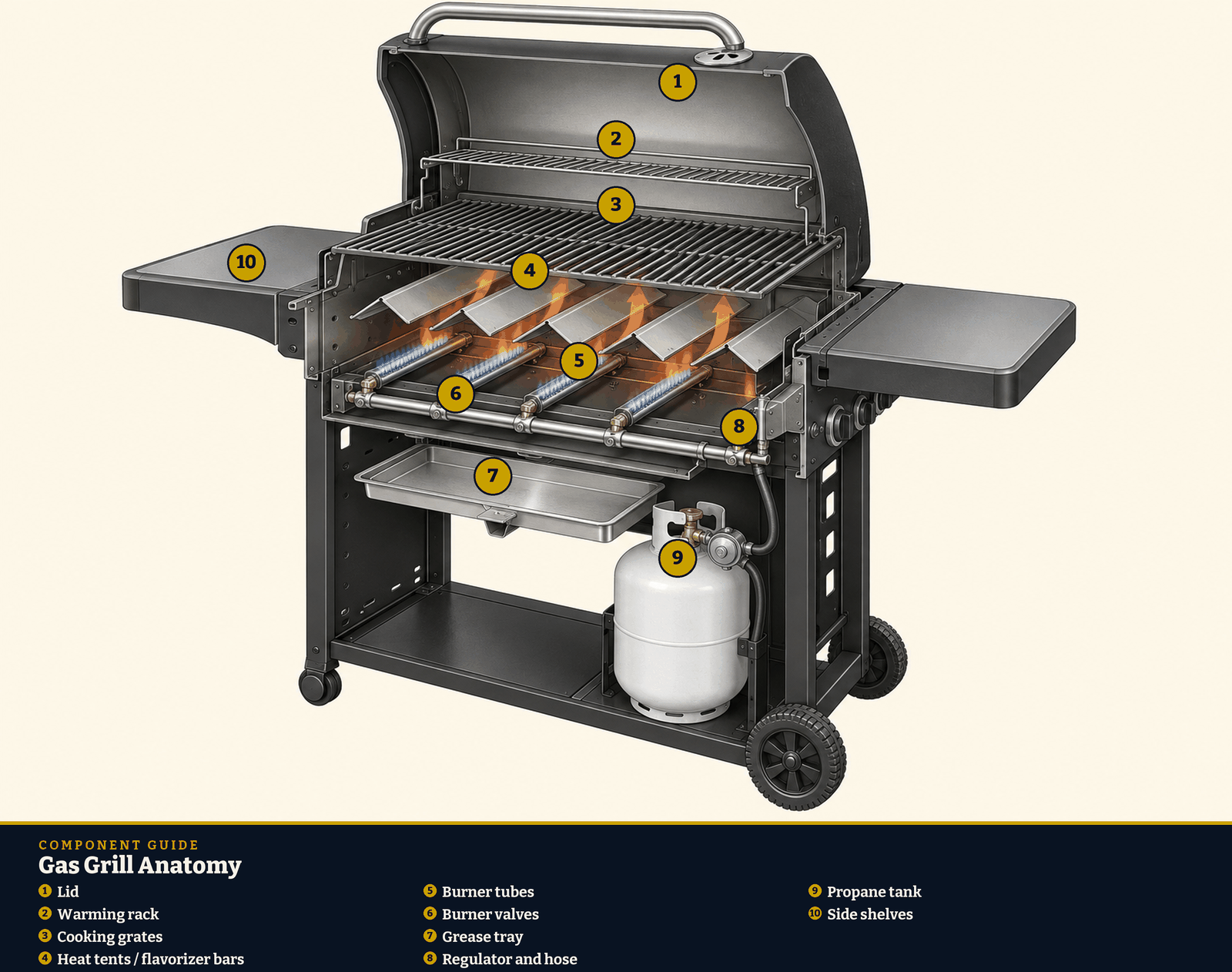
- For a two-burner grill: light only one burner. Place food on the unlit side. This creates an indirect zone.
- For a three-burner grill: light only the far left or far right burner on low. Place food on the opposite end.
- Make a smoke pouch: wrap a handful of wood chips in heavy-duty foil, poke 6-8 holes in the top, and place it directly on the lit burner's heat deflector.
- Preheat the grill with the smoke pouch in place for 10-15 minutes until you see smoke coming out of the vents.
- Place meat on the cool side. Close the lid and monitor temperature at the grate level using a probe thermometer — not the built-in dome thermometer.
- Replace the smoke pouch every 45-60 minutes if a longer cook is needed. It will be burned out after about an hour.
Mr. B's Pitmaster Note
Gas grills run hot and leak smoke — these are real limitations. For short cooks like ribs, chicken, or salmon, the results can be very good. For a 12-hour brisket, a dedicated smoker is the right tool. If you only have a gas grill right now, use it and get comfortable with smoke management. The fundamentals transfer directly when you upgrade.
Use your equipment manufacturer's instructions, keep the cooker outdoors on a stable noncombustible surface, and verify food temperatures with a calibrated thermometer.