By Mr. B · Published 2026-07-29 · Updated 2026-08-04
Offset Smoker Setup
How to set up and manage an offset smoker from cold start to cook-ready — coal bed, temperature stabilization, and fuel additions throughout the cook.
Key Concepts
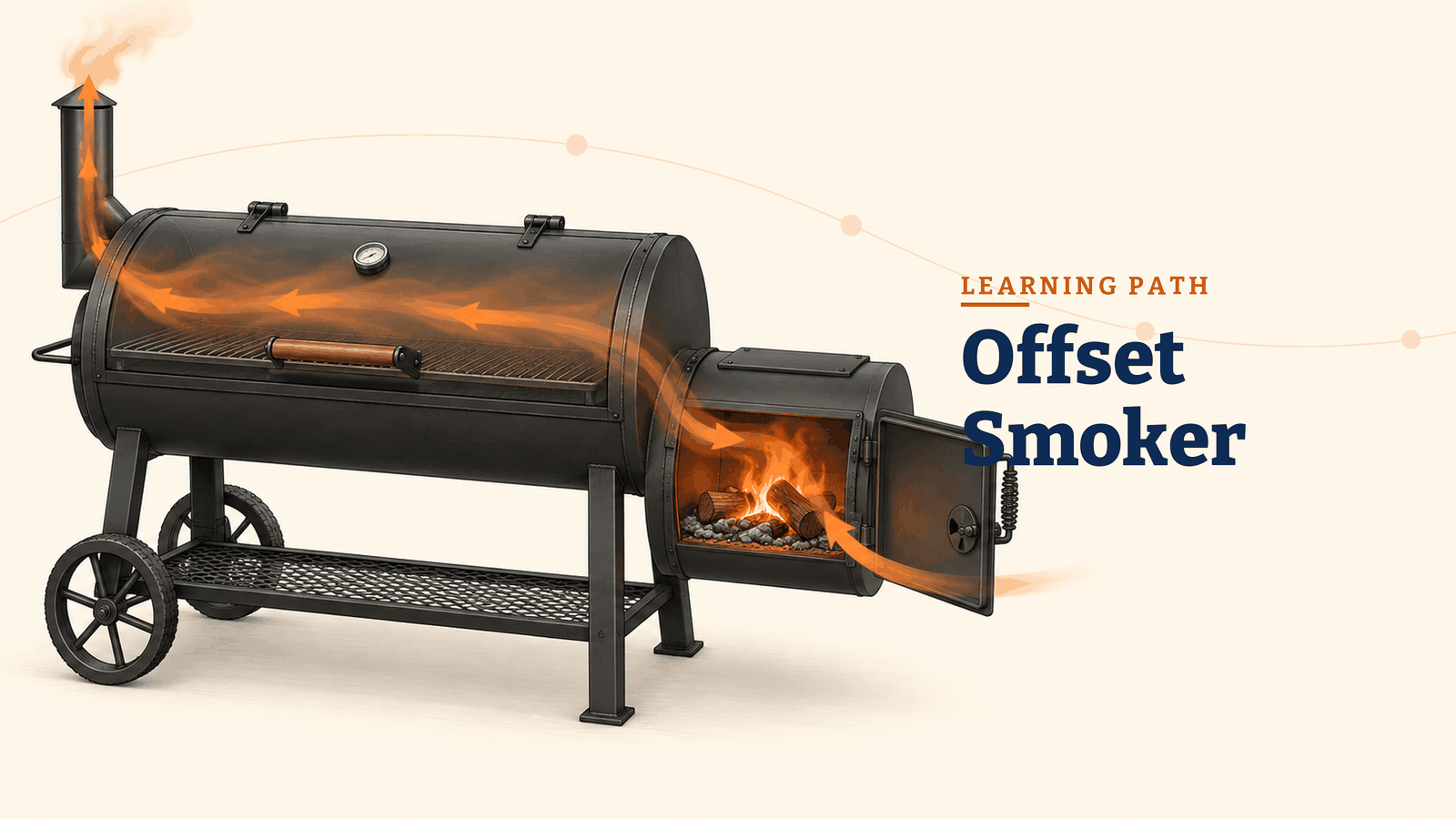
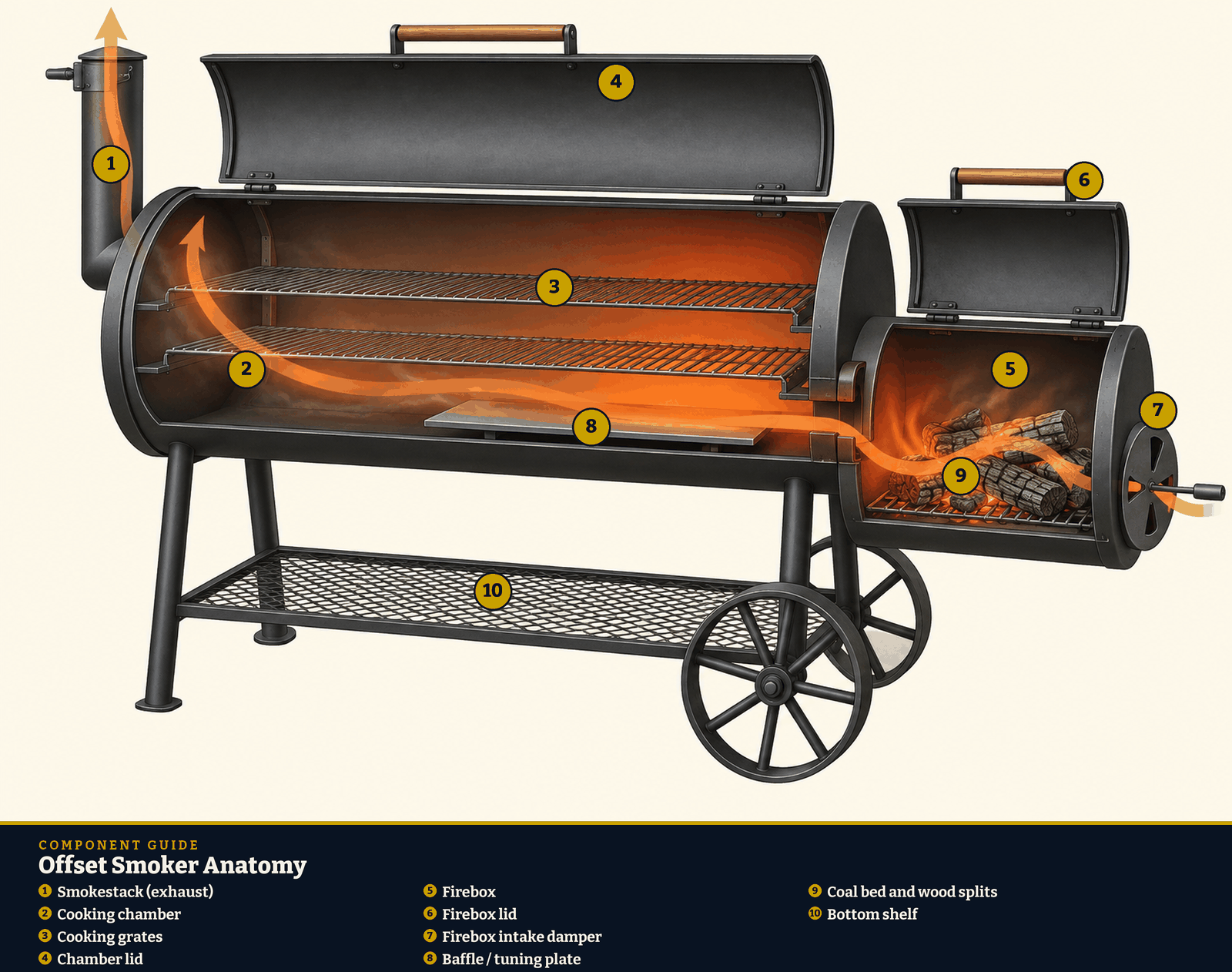
- Offset smoker anatomy: firebox, cooking chamber, chimney, intake vent
- Coal bed: a base of hot coals that supports clean wood combustion
- Preheating: the pit needs to be fully up to temp before meat goes on
- Hot spots: offset smokers run hotter near the firebox and cooler near the chimney
- Log management: when to add wood and how much to add
Put It Into Practice
- Start a full chimney of charcoal and let it fully ash over. Pour it into the firebox to build the coal bed.
- Open all vents fully during startup. Maximum airflow establishes a clean, hot fire faster.
- Once the coal bed is established, add one wood split on top. Let it ignite and burn down before closing the firebox door.
- Let the pit stabilize at your target temp for 20-30 minutes before adding meat. Do not rush this step.
- Add a dry split when the coal bed and pit temperature show that more fuel is needed. Keep spare wood in a safe, dry location away from hot surfaces and open flame.
- Rotate meat halfway through the cook if needed — the end nearest the firebox cooks faster.
- Keep the chimney fully open throughout. Control temperature with fuel size, fuel timing, and small intake adjustments. Keep the firebox door closed except when safely tending the fire.
Mr. B's Pitmaster Note
Wet or green wood makes an offset harder to control and can produce heavy smoke. Use properly seasoned, dry splits sized for your firebox. Build the coal bed first, then add one split at a time so you can read the fire before making another change.
Start With the Coal Bed
The coal bed supplies steady ignition heat. Without it, each new split struggles, smolders, and creates heavier smoke. Start with fully lit charcoal, then add a dry split sized so it can ignite without crowding the firebox.
Airflow Before Temperature
Keep the exhaust open so combustion gases can leave the pit. Control heat with fuel size, fuel timing, and careful intake adjustments. A clean fire with a small temperature swing is better than a restricted fire sitting on one exact number.
What Clean Smoke Looks Like
Clean smoke can be thin blue, faint, or nearly invisible. Thick white or gray smoke that lingers usually means the split is not burning cleanly. Open airflow, confirm the coal bed is healthy, and let the new split ignite before adding more fuel.
Map the Cooking Chamber
Place grate-level probes near the food, not against metal. Run a dry test to learn the hot area near the firebox and the cooler area toward the stack. Rotate large cuts only when the temperature map or color development shows a real need.
Common Offset Mistakes
- Using splits that are too large for the firebox.
- Closing the stack to force the temperature down.
- Adding several splits before reading the last adjustment.
- Putting meat on before the pit and fire stabilize.
Put the Setup to Work
Practice with Backyard Smoked Brisket or Backyard Pulled Pork. Review Airflow and Venting before your next long cook.
Use your equipment manufacturer's instructions, keep the cooker outdoors on a stable noncombustible surface, and verify food temperatures with a calibrated thermometer.