
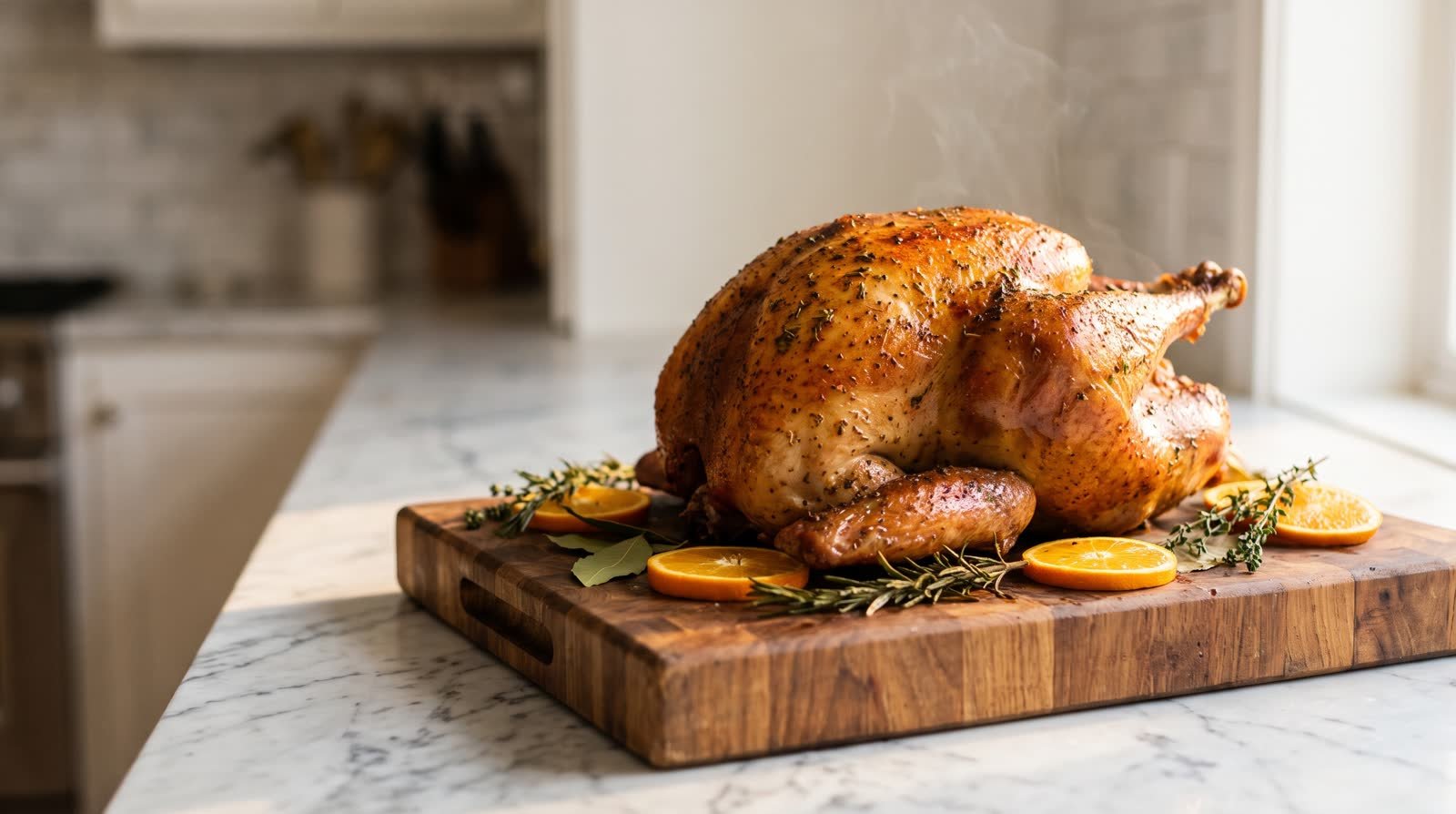
A turkey brine is a flavor step you start days ahead of Thanksgiving, and the cold is the part that matters most. The hard part is patience: the brine cools all the way down before the turkey goes in, and the turkey stays at 40°F or colder for the whole soak. This is my brine, the one from a big work-lunch cook for my coworkers, with the rules that keep it safe.
Pot to Platter
Mr. B’s brine (for one turkey)
1 gallon water; ½ cup kosher salt; 1½ cups brown sugar; 3 bay leaves; 1 teaspoon black peppercorns; 1 teaspoon each dried rosemary, thyme and oregano (he used a fresh poultry-herb pack: oregano, rosemary, parsley, thyme); 3 cloves garlic, minced; 1 orange, sliced (lemon if you like it sharper). Boil 20 minutes, stirring until the salt and sugar dissolve.
| When | What you do | The number |
|---|---|---|
| The pot | Everything in with the water. Stir so the salt and sugar dissolve. | Boil 20 minutes. |
| The cool-down | Cool the brine all the way down before the turkey goes in. Never put a turkey in hot or warm brine. | No warmth at all. |
| The soak | Turkey in a food-grade brining bag. USDA’s method is the refrigerator, for up to 2 days. | 40°F or colder, the whole soak. |
| Out of the brine | Take the turkey out, discard the brine, and pat it completely dry. | Completely dry. |
| On the smoker | Spritz lightly. | He held the Kamado around 225–235°F. USDA’s smoker range is 225–300°F for the whole cook. |
| Done | Check every spot before it comes off. | 165°F. Breast, thigh and wing. |
Go by the thermometer, not the clock.
“Because this is what’s gonna make the turkey good.”Mr. B, from the episode
What They Don’t Tell You
Three things brine recipes often skip.
- The bucket only works cold. Mr. B brines in a bag inside a food-grade bucket packed with ice. That only works if it stays at 40°F or colder the whole time: check it with a thermometer and keep adding ice. For a soak as long as 24 hours, the refrigerator is the safer route.
- No ice in the pot is about flavor, not safety. He lets the brine cool on its own so melting ice doesn’t water it down.
- Your thermometer needs a test. Water boils at 212°F at sea level, about 2°F lower for every 1,000 feet up. Ice water reads 32°F. If your thermometer is off, calibrate it or replace it.
The brine is what makes the turkey good, so mine cools on its own instead of getting watered down with ice in the pot. On my stove that’s 3 or 4 hours. Plan for it, because the turkey doesn’t go in until there’s no warmth at all.
Keep the turkey and the brine at 40°F or colder for the whole soak. USDA’s method is the refrigerator, for up to 2 days.
A turkey is done at 165°F in the thickest part of the breast, the innermost part of the thigh and the wing. A lower reading anywhere means it keeps cooking.
Hot food stays at 140°F or above on the way and on the table, or it’s chilled and reheated to 165°F. Nothing sits out longer than 2 hours.
Refrigerate within 2 hours. Eat leftover turkey within 3 to 4 days. Reheat to 165°F.
Here’s where most brined turkeys go wrong.
Three Mistakes to Skip This Year
- Rushing the cool-down. Cool the brine all the way down before the turkey goes in. Never put a turkey in hot or warm brine.
- Letting the bucket warm up. Keep it at 40°F or colder: check it with a thermometer and keep adding ice, or soak it in the refrigerator.
- Calling it done too early. Check the breast, thigh and wing for 165°F. A lower reading anywhere means it keeps cooking.
Fix those three and the checklist covers the rest.
Before the Turkey Goes In
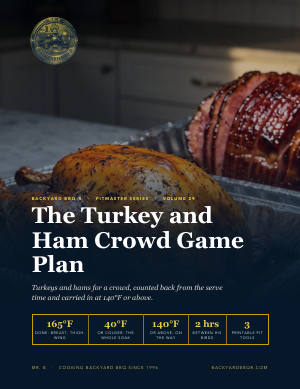
The Turkey and Ham Crowd Game Plan
This card gets one turkey brined and done. The Turkey and Ham Crowd Game Plan is the whole Thanksgiving crowd cook: the backward timeline for turkeys and hams, the two-bird schedule, holding and transport, a shopping and gear list, and printable Pit Tools.
Mr. B
Cooking backyard BBQ since 1996.
Mr. B, Backyard BBQ-R