
In this guide
Seasoning a pork butt is a sequence. Most people shake on a rub, put it on the pit, then wonder why the bark came out thin or too salty. The order is the part to fix.
Build the Batch from the Labels
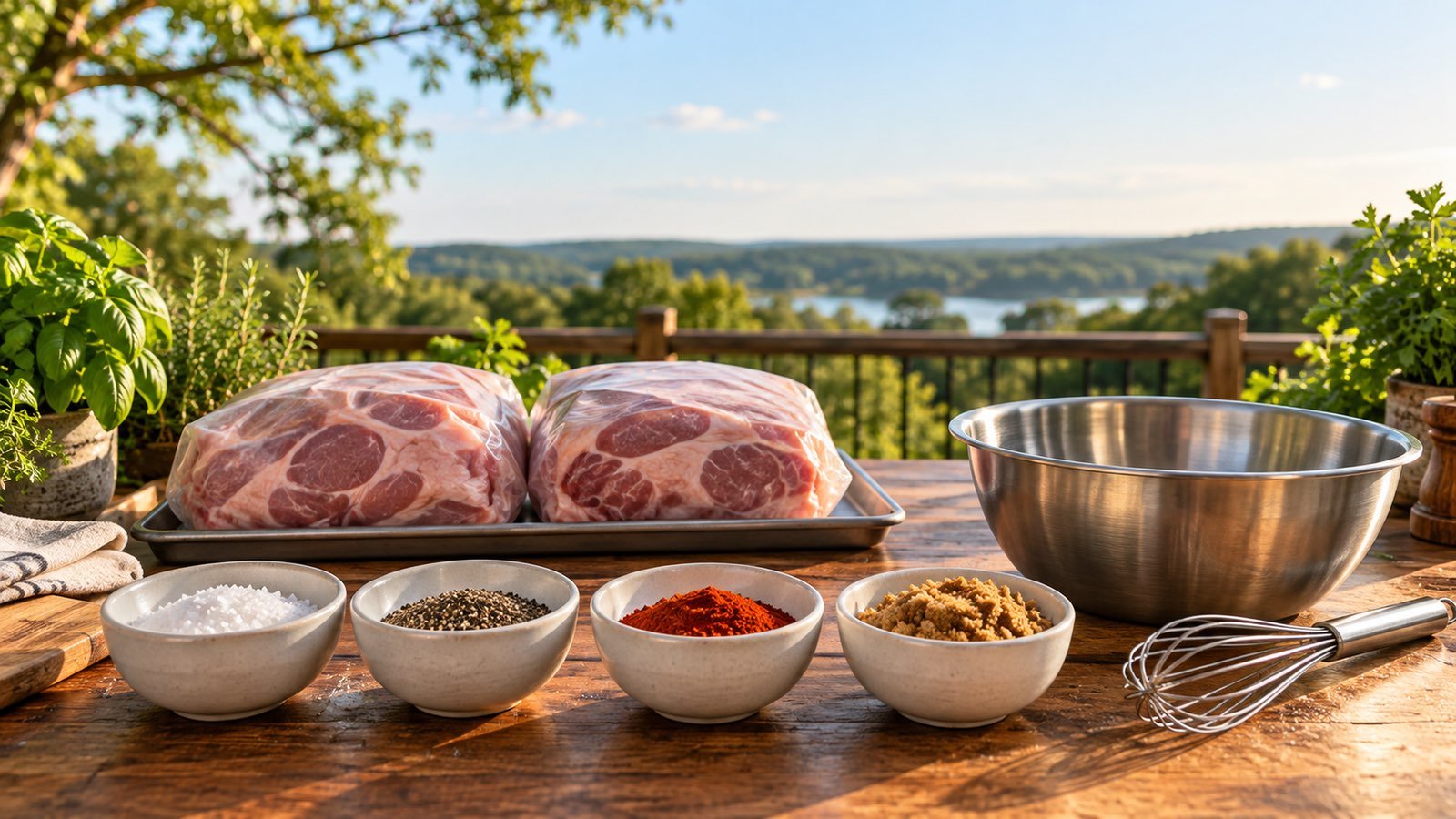
The filmed cook used four store-bought blends. Their salt content and formulations can change, so the tested batch below is for two 12 lb butts. Read current labels because commercial formulas can change, then mix the listed amounts in a clean bowl before the blend touches raw meat.
| Blend from the cook | Tested amount | Read the current label for | Decision |
|---|---|---|---|
| Bad Byron’s Butt Rub | 10 Tbsp | Salt, pepper, and allergens | Use as the savory base only after checking its salt load |
| Goya Adobo All Purpose | 7 Tbsp | Salt and garlic concentration | Add for its flavor without assuming it is unsalted |
| Kinder’s Prime Rib | 4 Tbsp | Salt, sugar and spice list | Use a small trial amount, then taste the cooked result |
| Lawry’s Chicken & Poultry | 4 Tbsp | Salt and herb list | Treat it as a seasoned blend, not a salt-free finisher |
Keep the jars separate from raw pork. Pour a trial mix into a clean bowl; reserve any unused portion before seasoning. The four measures total 25 tablespoons for 24 pounds of pork. Record the products and batch used so the tested version can be repeated; do not assume a reformulated jar has identical sodium.
I don’t like a lot of salt, y’all.Mr. B, from the episode
Read the Four Labels Back to Back
- Every one of these is salt-first. Salt is the number one ingredient in all four. You’re not adding salt to this rub – the rub is substantially salt. Never salt on top of it, and taste the finished pork before anyone reaches for a shaker at the table.
- Supermarket butts arrive “enhanced.” Some pork packages state that a solution was added. Read the actual package and account for its sodium when choosing a rub. Do not assume all supermarket pork has the same treatment or price.
- Mild is not pepper-free. Read current labels for pepper, chili, and allergens before serving guests with preferences or restrictions. Brand names alone do not prove what is in the jar today.
I don’t like a lot of salt, and I still spent years using salt-forward rubs and then salting the food again out of habit. It wasn’t the pork tasting heavy. It was me.
Don’t rinse the meat. I rinse those butts on camera to get the packing solution off, and USDA guidance says to skip the sink – washing raw meat doesn’t kill anything, and water can spread bacteria around your sink and work area. Drain the liquid, throw it out, pat the meat bone dry with paper towels. Keep raw pork at 40°F or below until cooking and limit time outside temperature control. Refrigerate perishables within two hours, or one hour above 90°F. Pork is safe at 145°F plus a 3-minute rest; pulled pork commonly needs further cooking for texture; confirm with a probe rather than a fixed pull number.
Where This Goes Wrong
- Putting it on the pit the second it’s seasoned. After coating the pork, refrigerate it until the cooker is ready. A fixed counter rest is unnecessary, and the archived explanation overstates what a tacky surface guarantees.
- A thin, patchy coat. Spread the chosen blend evenly. More powder can make the final food too salty, especially if the pork has an added solution.
- Leaving a boneless butt untied. An opened boneless roast may benefit from food-safe twine so it holds its shape. Follow the cut and cooker plan.
The Prep Checklist
When You Want the Whole System
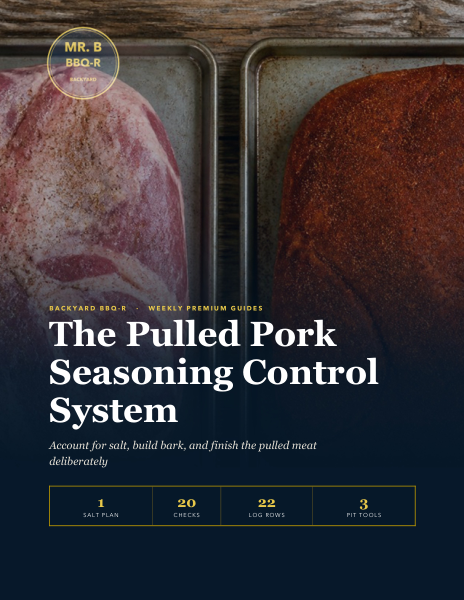
The Pulled Pork Seasoning Control System keeps the tested seasoning batches distinct and adds label checks, application decisions, a finishing-rub section, troubleshooting, and three printable tools. Watch the episode.
View Premium Guides →Watch the episode
Mr. B
Cooking backyard BBQ since 1996. These guides turn real cooks into practical steps you can use.
– Mr. B, Backyard BBQ-R