One Base Rub, Two Proteins
Seasoning Ribs and Chicken on the Same Grill
How to Use This Guide
Read it once end to end before your next cookout, then keep it with your gear. The rub formula, the split table, and the pre-cook checklist are built to be used right at the pit.
Why One Rub Isn't the Answer
Most of us grab one rub, shake it over everything on the grill, and hope for the best. Then the chicken skin comes out a little bitter and burnt at the edges, or the ribs taste flat next to it, and we can't figure out why. Here's the honest truth: the same rub that makes your ribs great is often the one working against your chicken. It isn't your fire and it isn't the meat — it's the sugar.
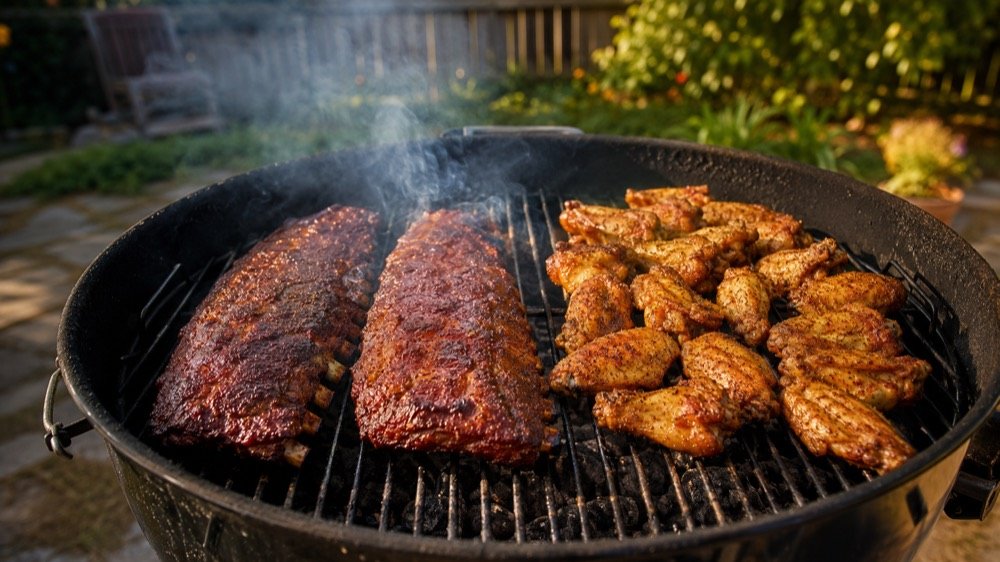
This week the cook in the video ran a real backyard load — about 40 pounds of chicken wings and a stack of pork baby back ribs on one grill at 250°F — for a baby shower and the fellas getting together. Chicken on one side, ribs on the other, and, as he put it, two different seasoning mixes. That's the whole idea of this guide: one base blend you build once, then split two ways so each protein gets what it actually needs.
"This right here, these seasonings — a mixture of this for chicken and a mixture of this for ribs."
You don't need a shelf full of bottles or a different recipe for every cut. You need to understand one thing about sugar and heat, and then a base rub you can adjust in about thirty seconds. Let's build it.
The One Base Rub You Build From
Start with a savory foundation that tastes good on anything off the grill — salt, smoked paprika, pepper, garlic, onion, and a touch of dry mustard. This is the base. It has no sugar in it yet on purpose, because sugar is the one thing we're going to change between proteins. Everything else stays the same.
Here is the base blend. This makes roughly a cup — enough to season about six baby backs plus a batch of wings with some left over. Mix it in a jar, shake it, and store what you don't use.
| BASE RUB INGREDIENT | AMOUNT | WHAT IT DOES |
|---|---|---|
| Kosher salt | 3 Tbsp | Seasons all the way through, firms the surface |
| Smoked paprika | 2 Tbsp | Color, gentle smoke, savory backbone |
| Black pepper | 1 Tbsp | Warmth and bite |
| Garlic powder | 1 Tbsp | Savory depth |
| Onion powder | 1 Tbsp | Rounds out the garlic |
| Dry mustard | 1 tsp | Quiet tang that lifts everything |
This ratio is roughly the classic pitmaster shape — a few parts salt, a couple parts paprika, and small amounts of everything else. If you want to remember it without the guide in hand, think 3 salt : 2 paprika : 1 of each of the rest. Once this base is made, you're two small moves away from a rub for either protein.
Make a double or triple batch and keep it in an airtight jar somewhere cool and dark. A dry rub holds its punch for about six months that way. The cook in the video keeps bulk seasoning ready in fridge containers precisely so a big multi-protein cook doesn't turn into a scramble.
Splitting It: Ribs vs. Chicken
Here's the reasoning that makes the whole system work. Ribs cook low and slow, so sugar has time to melt and caramelize into that sweet, glossy bark without ever getting hot enough to burn. Chicken cooks hotter and faster, and at those temperatures sugar carbonizes — it scorches, turns bitter, and takes your skin down with it. So the move is simple: sugar-forward for ribs, savory-forward for chicken.
You don't rebuild anything. You scoop out base rub and finish it two ways, right before it goes on the meat.
| RIBS (LOW & SLOW) | CHICKEN (HOTTER & FASTER) | |
|---|---|---|
| Add to base | 4 Tbsp brown sugar | 1 Tbsp brown sugar (or none) |
| Optional lift | 1 tsp chili powder | 1 tsp extra smoked paprika |
| Why | Sugar caramelizes over a long cook | Less sugar so skin won't scorch |
| Season ahead | 30 min to overnight | 15 min to 2 hours (up to 24) |
Timing matters as much as the blend. Salt needs a little time to pull moisture, dissolve, and settle back into the meat — that's what gives you seasoning all the way through instead of just on the surface. For chicken, even fifteen minutes helps the skin dry so it crisps instead of steams; a couple hours in the fridge is better. For ribs, give the rub thirty minutes at least, and overnight is genuinely better if you can plan for it.
Yes, and if you truly only want to make one rub, make the chicken version — the savory, low-sugar one — and just add a spoon of brown sugar to the portion going on your ribs. One jar, one small scoop, both proteins handled.
Running Both on One Grill
You do not need two setups to cook two proteins. You need one grill and two zones. The cook in the video kept it about as simple as it gets: ribs on one side, chicken on the other, both toward the higher rack where the heat is steadier, grill holding around 250°F. Ribs go on first because they take longest; chicken joins later since it cooks faster.
A little prep up front saves you real time at the end. Pulling the thin membrane off the back of the ribs lets seasoning and smoke reach the meat, and cutting the rack into sections before it cooks means no fighting with a knife around hot bones when everyone's hungry. Keep the raw chicken physically separated from the ribs the entire time — don't let them touch on the grate or the platter.
- Pull the membrane off the back of the ribs and cut the rack into sections; pat everything dry.
- Season: sugar-forward rub on the ribs, savory rub on the chicken. Let both rest while the grill comes up.
- Set two zones and bring the grill to about 250°F on the cooking side.
- Ribs on first, toward the higher, steadier rack. Chicken goes on the other side a bit later.
- For faster, moist ribs, wrap them in heavy-duty foil for about an hour partway through, then unwrap.
- Sauce the ribs near the end so it sets without burning; check chicken doneness with a thermometer.
- Rest the ribs a few minutes, then cut and serve — bones already portioned.
That foil wrap is the shortcut worth knowing. Instead of babysitting a full three-hour rack, you wrap for roughly an hour to trap the juices and speed things along, then finish unwrapped so the bark firms back up. The cook called it out plainly on camera as his way to cut the time in half.
| PROTEIN | GRILL TEMP | SAFE INTERNAL TEMP | DONENESS CUE |
|---|---|---|---|
| Chicken wings | ≈ 250°F + | 165°F (USDA minimum) | Check thickest part with a thermometer |
| Pork baby backs | ≈ 250°F | Safe at 145°F | Tender at 195–203°F; bend/pull test confirms |
Chicken is done at 165°F measured at the thickest part with a thermometer — not by color or by clock. Pork ribs are safe at 145°F, but they don't get tender until about 195–203°F, so for ribs, safe and done are two different numbers. Always keep raw chicken separated from the ribs and from anything already cooked, and wash hands and tools after handling raw poultry.
Scaling the Base Rub
One rack is easy. A cookout is a different animal — this week's cook was feeding a baby shower and the fellas at the same time, which is exactly when people reach for a shaker of whatever's handy and hope it's enough. Don't guess. The base rub scales cleanly, so mix what you actually need in one jar and split it at the pit.
Use this as a starting point. A batch is the full base recipe from earlier — roughly one cup. Season lightly and evenly; you can always dust a little more, but you can't take salt back off.
| COOKING FOR | BASE RUB | BROWN SUGAR (RIBS ONLY) | GOOD FOR |
|---|---|---|---|
| A rack + a few wings | 1 batch | 4 Tbsp | Weeknight two-protein cook |
| Family cookout (6 racks) | 2–3 batches | 3/4 cup | A full afternoon spread |
| Big event (crowd) | 4+ batches | 1+ cup | Baby shower, tailgate, block party |
Mixing ahead is the quiet trick behind a calm cook. Blend the base the night before, portion the brown sugar for the rib side into its own container, and your morning is just seasoning and firing the grill — not measuring six spices with raw chicken on your hands.
Common Mistakes
Almost every disappointing two-protein cook comes down to one of these. None of them are about skill — they're about the sugar-and-heat rule, and once you see them you won't make them again.
- Using one sweet rub on everything. The sugar that builds beautiful bark on low-and-slow ribs scorches on hotter chicken. Split the rub: sugar-forward for ribs, savory for chicken.
- Seasoning right before it hits the grate. Salt needs time to work in. Give chicken at least 15 minutes (a couple hours is better) and ribs at least 30 minutes so the flavor goes deeper than the surface.
- Cooking chicken by look instead of temperature. Golden skin doesn't mean 165°F inside. Pull chicken by thermometer at the thickest part, every time.
- Treating ribs like they're done at a safe temp. 145°F is safe but tough. Ribs need to ride up to roughly 195–203°F to turn tender — give them the time.
- Letting raw chicken touch the ribs. Keep them separated on the grate and the platter, and clean up after handling raw poultry, to avoid cross-contamination.
Pre-Cook Checklist
Run through this the night before or the morning of your cookout. It keeps a two-protein cook calm instead of chaotic — the whole point of prepping ahead.
- Base rub mixed and in a labeled jar
- Brown sugar portioned out for the rib rub
- Membrane pulled off the back of each rib rack
- Ribs cut into sections and patted dry
- Chicken patted dry, kept separate from the ribs
- Ribs seasoned (sugar-forward) 30 min–overnight ahead
- Chicken seasoned (savory) 15 min–2 hr ahead
- Grill set for two zones; target ≈ 250°F on the cook side
- Heavy-duty foil on hand for the rib wrap
- Instant-read thermometer within reach
- Sauce ready for the end of the rib cook
- Clean platter and tongs staged for cooked food only
- Food-safe gloves on hand if cooking for others
Take the Next Step
This guide gets you through a solid two-protein cookout this week with both proteins seasoned right. If you want the complete system — exact rub formulas scaled by the pound, a full staging timeline so ribs and chicken finish together, temperature-zone management, and a troubleshooting section for when something drifts — that's what the premium guide is built for.
It's the whole two-protein pit playbook, the kind of reference you keep next to your gear all season. You'll find it, along with every free guide, at www.backyardbbqr.com.
Season with intention, keep it clean, and cook for the people at the table. Do that and you'll put out ribs and chicken that make folks ask what your secret is. The secret is you understood the sugar. See you at the pit.
Run it yourself and let Mr. B know how it goes.