Home Start Here Pitmaster Videos Recipes Free Guides Premium Guides Newsletter About Contact
Back to Free Guides
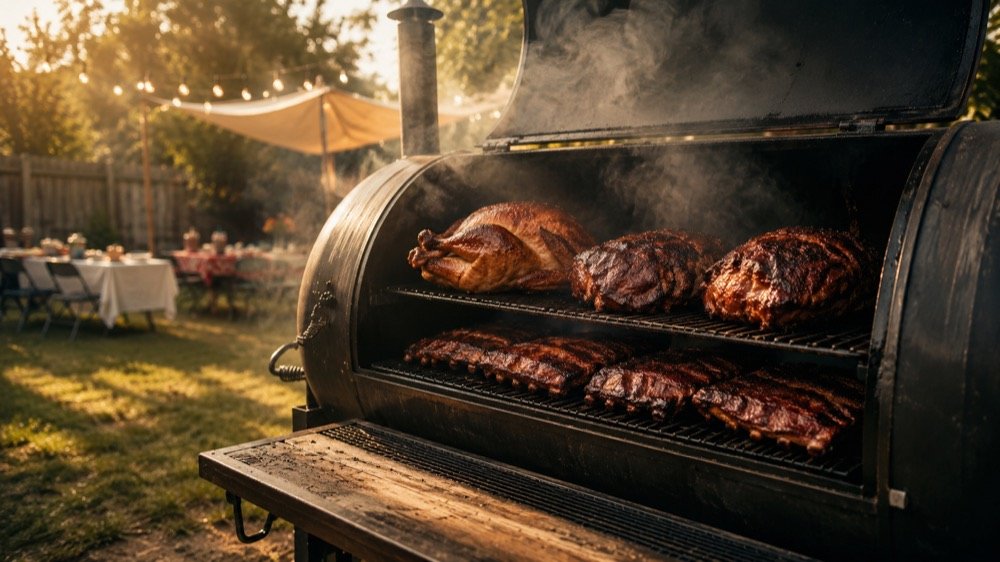
A backyard smoker loaded with a whole turkey, two pork shoulders, and racks of ribs cooking together on a hot Fourth of July afternoon, smoke rolling off the meat

Fire Management in Extreme Heat

How to keep your pit steady when the weather won't cooperate

WHAT'S INSIDEThe hot-weather fire method — how to keep your pit dialed in when it's 90°, 100°, or hotter outside. Includes a heat-adjustment quick-reference, the every-45-minutes fire rhythm, USDA holding and doneness temps, a common-mistakes fix list, and a printable pre-cook checklist.
VIDEOMr. B's Epic 50th Birthday Bash: BBQ, Casino Night & More! — this week on the channel
CHANNELyoutube.com/@BackyardBbqR
WEBSITEwww.backyardbbqr.com

How to Use This Guide

Read it once end to end, then keep it with your gear. The heat-adjustment table and the pre-cook checklist are built to be used at the pit on a hot day — glance, adjust, get back to your people.

START HERE

When the Weather Runs Your Pit

Let me tell you what happened. This past 4th of July I had a big cook going — turkey, pork shoulders, ribs, the whole spread for a party. And it hit 102 degrees here in Maryland, one of the hottest days of the year. I was pressure-washing, putting bug spray on the grass, running around getting ready for a hundred people — and my fire got away from me. The temps climbed and climbed, and that's on me. I got busy and stopped watching the pit.

Here's the lesson I want you to walk away with, because it's the one thing a lot of backyard cooks never account for: the weather is a variable in your cook, same as your wood, your airflow, and your meat. On a mild day your pit and the outside air are working together. On a 100-degree day, the sun and the ambient heat are actively pushing your temperature up — and if you set your fire like it's a normal day and then walk off, it will run away from you.

"One thing you can't compensate for is Mother Nature."

You can't argue with the weather — but you can plan around it. This guide is the exact hot-weather approach I use: how to set up before you light, how to run a steadier fire when it's brutal out, how to keep your food safe in the heat, and the mistakes that cost people a good cook every summer. None of it costs a dollar. It's all in how you read the day and manage the fire.

THE SETUP

Read the Day Before You Light

A hot-weather cook is won or lost before the first log goes on. The two biggest levers you have are where your pit sits and how much fuel you start with — and both need to change when it's hot. A cooker baking in direct afternoon sun can run 15–25° hotter than the same cooker in the shade, so where you park it matters as much as how you vent it.

Walk the yard before you light and set yourself up to win. A few minutes here saves you an afternoon of chasing temperature.

  • Find shade for the cooker. Direct sun is free heat you didn't ask for. Move the pit under a tree, an awning, or the shady side of the house if you can — never under a closed structure, always open air.
  • Check the forecast for the peak, not the start. It may be 85° when you light at 9 a.m. and 100° by 2 p.m. Plan your fire for the hottest part of the cook, not the coolest.
  • Start with a smaller fire than usual. On a hot day the outside air does part of your heating for you. Less charcoal, fewer coals to begin — you can always add, but you can't easily take heat away.
  • Set up a shaded staging spot for cold food. Coolers and cold sides should never sit in the sun. Pick their spot now.
  • Have water and a hat for you, too. A cook who's overheated makes bad calls. Take care of yourself so you can take care of the fire.
PITMASTER NOTE

Your grill thermometer is reading the air inside the pit — and on a hot day that air is fighting you. Trust a good probe thermometer in the meat over the dome gauge every time. Doneness is an internal temperature, not a clock and not a guess.

THE RHYTHM

The Fire Rhythm That Holds

Once you're lit, a steady fire comes from a steady rhythm — not from big dramatic moves. The way I run mine is simple: I manage the fire on a schedule, I make small adjustments, and I give the pit time to answer before I touch it again. On a normal day I feed a log or two every 45 minutes to hold my temp. On a hot day, that same rhythm needs a lighter touch because the weather is already adding heat.

Here's the rhythm I run, adjusted for a scorcher:

  1. Feed on a clock, but feed less. Check the fire every 45 minutes like normal, but add a little less fuel than you would on a mild day. The ambient heat is doing part of the work.
  2. Control temperature with the intake, not the exhaust. Keep your exhaust/stack damper open so smoke and heat escape cleanly. You raise and lower temp with the intake vent — that's your throttle.
  3. Move the vent a little, then wait. Nudge the intake about a quarter-inch and give the pit 10–15 minutes to settle before you touch it again. Chasing the needle is how you overshoot.
  4. Pre-warm your next split. Set the next piece of wood near the firebox so it's warm and dry when it goes on. A cold, damp split smolders and drops your temp, then spikes it when it finally catches.
  5. Use a fan to hold heat if you've got one. A steady airflow evens out hot spots and helps a charcoal fire hold temperature. As I say: get you a fan — something that holds and moves heat — and let it help you stay level.
  6. Never walk off for long. This is the whole ballgame in extreme heat. Check, adjust, and stay close. The afternoon I got busy and stopped watching is the afternoon my temps ran away.
PRO TIP

Yes, and if your pit still creeps up no matter how little fuel you add, the sun is probably the culprit — not your fire. Move the cooker into shade, close the intake down another notch, and open a lid vent to shed heat. When it's 100° out, subtraction beats addition.

REFERENCE

Hot-Weather Adjustments at a Glance

Keep this table where you can see it on a hot cook. It translates what the weather is doing to your pit into a specific move, so you're reacting on purpose instead of guessing. The hotter it gets, the more your job shifts from adding heat to shedding it.

OUTSIDE TEMPWHAT IT DOES TO YOUR PITYOUR MOVE
Under 75°FLittle effect — cook as normalStandard fire; feed a log or two every 45 min
75–89°FPit runs slightly hot; holds heat longerStart a touch smaller; check the vent sooner
90–99°FPit climbs on its own; sun adds real heatShade the cooker; smaller fuel adds; watch closely
100°F and upTemps can run away fast; danger-zone risk for foodMinimal fuel; shade; vent to shed heat; never walk off

Notice the pattern: as the temperature climbs, you feed the fire less, not more, and you spend more time watching it. That feels backwards to a lot of cooks, and it's exactly why hot-day cooks go sideways.

DON'T DO THIS

Common Mistakes When It's Hot

Almost every ruined hot-weather cook comes down to one of these five mistakes. I've made every one of them — including on the 4th, when I got distracted and let the fire climb. Learn them here so you don't have to learn them the hard way at your own party.

  • Building your normal-size fire. On a 100° day the outside air is already heating your cooker, so a full fire overshoots fast. Why it happens: habit. The fix: start smaller and add fuel only as the pit actually needs it.
  • Walking away to do other party prep. This is the one that got me. You've got a dozen jobs before guests arrive, so you leave the pit — and the heat runs off without you. The fix: assign someone to watch the fire, or set a 20-minute timer and check every time it goes off.
  • Cranking the heat to 'catch up' when guests arrive. Panic-adding fuel to rush food is how you burn the outside and leave the inside raw. The fix: par-cook thicker items in a covered zone or the oven and finish them over the fire for color — no gamble.
  • Choking the exhaust to lower temp. Closing the stack traps heat and dirty smoke and makes food taste bitter. The fix: leave the exhaust open and control temperature with the intake vent instead.
  • Leaving cold sides and meat in the sun. Potato salad, slaw, and raw proteins sitting in 100° heat hit the bacterial danger zone in under an hour. The fix: keep cold food shaded and on ice, and only bring out what people are about to eat.
STAY SAFE

Food Safety When It's Hot

Heat isn't just hard on your fire — it's hard on your food safety, and it's the part nobody wants to think about at a party. Bacteria grow fastest between 40°F and 140°F, a range called the danger zone, and they double in as little as 20 minutes. On a normal day you have a two-hour window before food out at room temperature becomes a risk. When it's above 90°F outside, that window shrinks to one hour.

So the rules get stricter exactly when a cookout gets busiest. Hold your hot food hot, keep your cold food cold, and don't let anything sit in between. Here are the numbers to cook and hold by:

FOODSAFE MINIMUM INTERNAL TEMPNOTES
Chicken & turkey (all)165°FWhole bird, thighs, wings — no pink at the bone
Ground beef / burgers160°FCook straight through; no rare ground meat
Pork (chops, shoulder)145°F minPull shoulder at 200–205°F for pulled-pork texture
Beef & pork ribs145°F safeCook to tender — usually 195–203°F for bite
Hold hot food at140°F or aboveBelow 140° the clock starts on the danger zone
Keep cold food at40°F or belowOn ice, in the shade — refresh ice as it melts
PITMASTER NOTE

No cooler? No chafing dish? Line a clean cooler with towels, wrap your finished meat tightly in foil, and nest it inside. Done right, that setup holds cooked meat above 140°F for hours — a free holding box that keeps your food safe while you enjoy the party. And when it's over, get leftovers into shallow containers and into the fridge within one hour on a hot day.

BEFORE YOU LIGHT

Your Hot-Day Pre-Cook Checklist

Print this page and run it before your next hot-weather cook. It's the difference between a fire you manage and a fire that manages you. Check each box before the first log goes on.

  • Checked the forecast for the hottest part of the cook, not just the start
  • Moved the cooker into shade, in open air
  • Started with a smaller fire than I would on a mild day
  • Exhaust/stack damper is open; I'll control temp with the intake
  • Probe thermometer is on hand and tested — not relying on the dome gauge
  • Next split is staged near the firebox to pre-warm
  • Fan is set up to help hold and move heat (if I have one)
  • A 20-minute timer or a helper is assigned to watch the fire
  • Cold food and coolers have a shaded spot, on ice, out of the sun
  • Cooler or chafing setup ready to hold finished meat at 140°F or above
  • Water and a hat for me — an overheated cook makes bad calls
  • Plan to refrigerate leftovers within one hour once we're done
NEXT LEVEL

Run the Whole Party Cook Like a Pro

This guide keeps your fire steady in the heat. But on the 4th I wasn't cooking one thing — I was running turkey, pulled pork, and ribs for a full party, all off the same pit, on the hottest day of the year. Juggling multiple proteins on a tight timeline while the weather fights you is a whole other skill.

That's what the premium guide is for. The Backyard Multi-Protein Party Cook takes everything here and scales it up: how to run turkey, pulled pork, and ribs together without a traffic jam at the pit, a full countdown timeline from serve time, the rib method I now swear by, quantity math by headcount, a holding-station build, and a troubleshooting matrix for when the heat or the crowd throws you a curveball. It's the complete system for feeding a crowd well and still getting to sit down at your own party.

Grab it at www.backyardbbqr.com — and if this free guide saved you one good cook this summer, the premium guide will save you the whole season. Thanks for cooking with me. — Mr. B

Run it yourself and let Mr. B know how it goes.