
In this guide
Houston came with a reputation. My family ordered across the menu, some sides were solid, one person thought the chicken was okay, and the broader meal did not land for us. That is one visit and one family’s experience, and the name over the door cannot take the bite for you. So I taste the same way every time and write down what happened in the bite before I decide anything. That keeps the critique fair to the restaurant and useful at my own pit.
The Five-Part Bite Check
Start with the meat by itself. Take one bite from the center of the slice or portion, then run the five checks in the same order every time, so one strong or weak element does not hide the rest. The last column is a controlled backyard test, not proof of what another kitchen did.
| Check | What to look for | If it misses, test at home |
|---|---|---|
| Seasoning balance | Notice salt first. Seasoning should support the meat, not become the only flavor. | Salt type, amount, brine |
| Texture | Brisket should hold together, then separate gently. Ribs should bite cleanly without turning mushy. | Probe feel, slice thickness |
| Moisture | Judge the full chew, not surface grease. A shiny slice can still eat dry. | Finish and hold time |
| Smoke and bark | Clean smoke and set bark, with no harsh, ashy, or bitter finish. | Airflow and combustion |
| Value | Portion, quality, service, and price together. Would you order the same item again? | Not a pit test. Decide yes or no. |
If two checks miss, record both before choosing the main one. A salty bite can also be tender, and a dry bite can still carry clean smoke. Separating the categories keeps one miss from erasing everything that worked.
the name over the door cannot take the bite for you.From this guide
What the Plate Can Hide
- Sauce, pickles, bread, and sides can cover the exact thing you are trying to judge. They can improve the plate, and they can also mask a salty patch or a dry chew. Take one clean bite before any of it changes what you taste.
- One sample can lie. If you think the first piece came from a bad edge or a salty patch, taste a second piece before you score it. I bought another plate in Houston for that exact reason.
- A useful critique names the symptom, not the culprit. Write “too salty for my taste,” “tough or tight,” “dry through the chew,” or “bitter or ashy.” That is a fair description for the restaurant and something you can actually study at your own pit. Blame is neither.
It ain’t cold-blooded. It’s honest, because I like people to critique what I do.
Keep hot food at 140°F or above. Refrigerate leftovers within 2 hours, or within 1 hour when the surrounding temperature is above 90°F.
Where a Taste Test Goes Wrong
- Letting the name set the score. Judge the bite, not the reputation, and keep the opinion tied to the meal you ate: the date, the order, the price.
- Letting one miss erase everything that worked. Score each category on its own, record one positive detail, and write one thing the plate could not prove.
- Rebuilding your whole cook after one meal. Choose one pit variable to test, run it, and record the result before you change a second one.
The Plate-to-Pit Scorecard
Fill this in at the table, before the plate is gone.
When You Want the Whole Tasting System
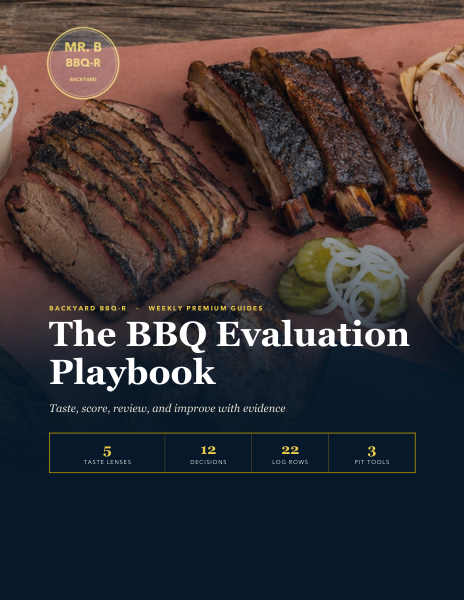
This sheet helps you describe one plate. The BBQ Evaluation Playbook turns the same method into a complete tasting system for brisket, ribs, pulled pork, turkey, chicken, sides, service, and value, with clear anchors for judging each category, so you can compare plates without letting hype lead the score. Watch the source visit: Houston, We Have a BBQ Problem.
View Premium Guides →
Mr. B
Cooking backyard BBQ since 1996. These guides turn real cooks into practical steps you can use.
– Mr. B, Backyard BBQ-R