Smoker Setup Lesson
Griddle & Flat Top Setup
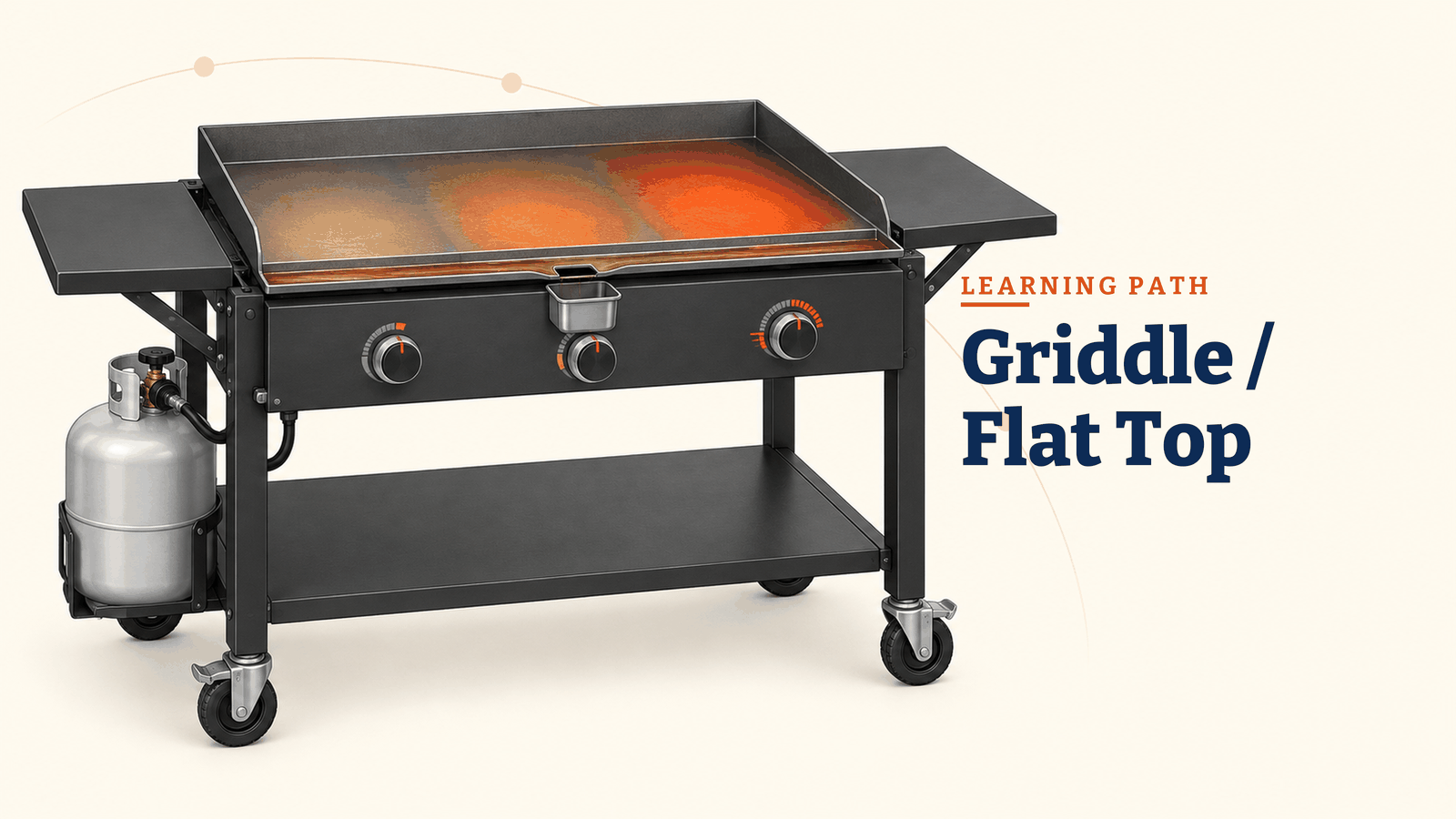
A flat top griddle turns your backyard into a diner. Learn how to season the plate, set heat zones with the burners, and manage grease so every cook is clean.
LevelBeginner
Learning PathSmoker Setup
Lesson22 of 24
Key Concepts
- The plate is the cooking surface; seasoning builds the nonstick layer that makes it work
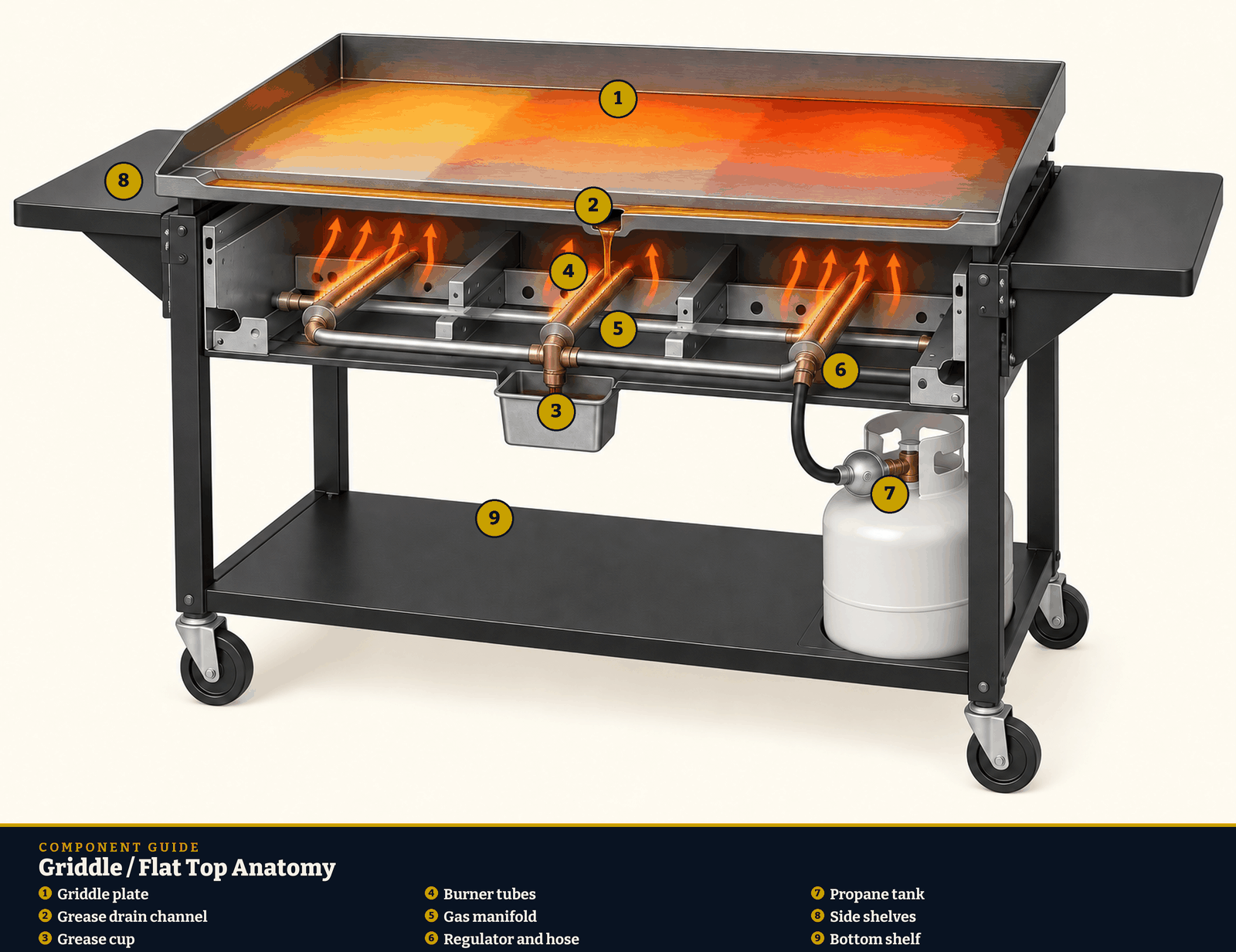
- Burner zones: each burner heats its own strip of plate, so run one high, one medium, one low
- Grease management: the trough and cup catch runoff. Keep them clear so nothing catches fire
- Preheat until a drop of water dances, not until the plate smokes
- Oil goes on the food or as a thin film on the plate, never in pools
Put It Into Practice
- First season: wash the new plate with soapy water, dry it, then apply thin coats of high-smoke-point oil and heat until it stops smoking. Repeat 4-5 times.
- Preheat with all burners on medium for 10-15 minutes.
- Set zones: high for searing, medium for cooking through, low or off for holding.
- Cook with a wide spatula and a scraper. Move food between zones instead of adjusting burners.
- Scrape debris into the grease trough while the plate is still hot and wipe with a paper towel.
- Finish with a thin coat of oil while the plate is warm to protect the seasoning.
Mr. B's Pitmaster Note
Grease fires on a griddle come from a full cup or a plugged trough. Empty the cup every cook, and keep a lid or sheet pan handy to smother a flare-up. Never put water on a hot plate. It will warp, and it will throw steam at you.
Use your equipment manufacturer's instructions, keep the cooker outdoors on a stable noncombustible surface, and verify food temperatures with a calibrated thermometer.