In this guide
Burnt ends don’t have to start with a brisket. Take a ham that’s already fully cooked, cube it, give it smoke, and baste it with honey, butter, apple cider vinegar and brown sugar until it eats like candy. I make them around Halloween for a reason: every parent on the block walks up your driveway anyway. The kids get candy. The grown-ups get a cup of ham, and they remember who made it.
The Cook, Start to Finish
Six moves. The heat and times are what I ran on my kamado; your cooker will run different, and the thermometer is the number that doesn’t move.
| Step | What you do | Heat and time | What you’re looking for |
|---|---|---|---|
| 1. Pick the ham | A ham labeled fully cooked (smoked). Straight out of the package, no rinsing. | — | “Fully cooked” on the label |
| 2. Cube it | Bite-size cubes, about the same size so they cook evenly. Save the bone. | A few minutes with a sharp knife | Even pieces in aluminum pans, not crowded |
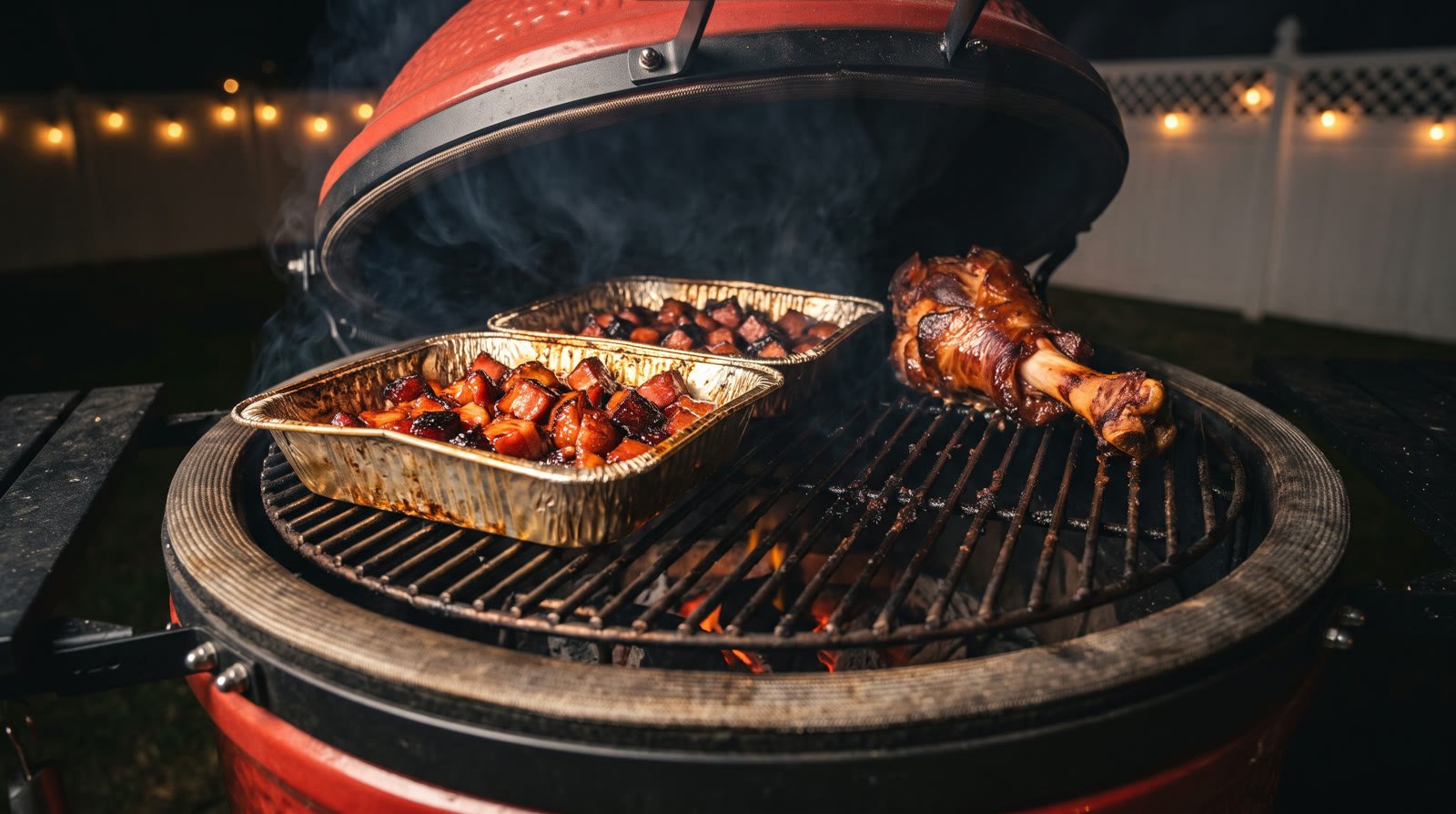
| 3. Smoke | Pans on the grate, indirect (deflector in on a kamado). The bone smokes beside them. | About 255°F on my pit, about 1 h 45 min to the first look | Edges darkening, juice in the pan |
| 4. Drizzle | Melt honey, butter, apple cider vinegar and brown sugar; baste the cubes with it and the pan juices. | Same pit | Every cube coated |
| 5. Finish | Back on, lid closed, then shut the vents. | About 15–20 minutes more | Sticky, glossy, “like candy” |
| 6. Check and hold | Probe a few cubes, then cover with foil and keep them warm: low oven, chafing dish or insulated cooler. | Up to 2 hours out of the heat | 165°F before serving; 140°F or warmer while you hold |
The ham is already cooked, so every step after the knife is about flavor and getting it hot.
You’re soliciting free advertisement.Mr. B, from the episode
What They Don’t Tell You
Three things that matter more than the recipe.
- The ham is already cooked, so this is all flavor. You’re adding smoke, bark and glaze. That’s why it’s fast, and why the drizzle matters more than the clock.
- Cut-up ham has its own reheat number. A whole ham straight from a USDA-inspected package reheats to 140°F. Once you’ve cubed it, take it to 165°F. Check a few cubes, not one.
- Halloween is free advertising. People are already walking up to your door. One small cup per adult and a card that says who made it does more than any flyer.
Give it away on Halloween. If people start asking for hams for Thanksgiving, check your county’s rules before you take a dollar: in Ohio and most states, the cottage food law doesn’t cover meat, so selling takes a license or a licensed kitchen.
Start with a ham labeled fully cooked and don’t rinse it. Reheat the cubes to 165°F.
Hold them at 140°F or warmer while you serve, and don’t leave them out of the heat more than 2 hours (1 hour above 90°F). Refrigerate leftovers within 2 hours.
Three Mistakes
- Rinsing the ham. It spreads germs around the sink and doesn’t make it safer. Cube it straight from the package.
- Setting the pan out and walking away. Ham on a table all night sits in the danger zone. Keep it hot and swap in a fresh pan.
- Giving the dog the bone. Cooked bones splinter. Give the smoked bone to a neighbor for beans or greens.
Get those three right and the table runs itself.
Before You Set the Table
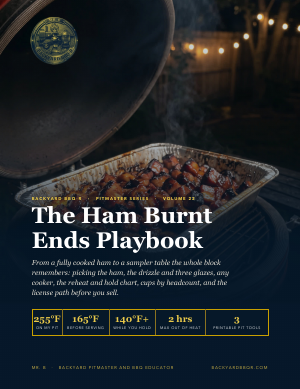
The Ham Burnt Ends Playbook
This card gets one cook right. The Playbook adds picking and sizing the ham, three glaze variations, setups for kamado, kettle, pellet and offset, the reheat and hold chart, cups by headcount, the license path before you sell, and the Pit Tools you print and keep.
Get the Ham Burnt Ends Playbook →Watch the Episode
Mr. B
Cooking backyard BBQ since 1996. Every temperature on this page is a USDA number; everything else is thirty years at the pit.
— Mr. B, Backyard BBQ-R