By Mr. B · Published 2026-07-29 · Updated 2026-08-04
BBQ Fundamentals Lesson
Understanding Heat Zones
Learn the difference between direct and indirect heat, how to use both zones, and why heat zone control is the foundation of every backyard cook.
LevelBeginner
Learning PathBBQ Fundamentals
Lesson1 of 24
Key Concepts
- Direct heat: food sits directly above the heat source — builds crust and char
- Indirect heat: food sits away from the heat source, cooked by convection
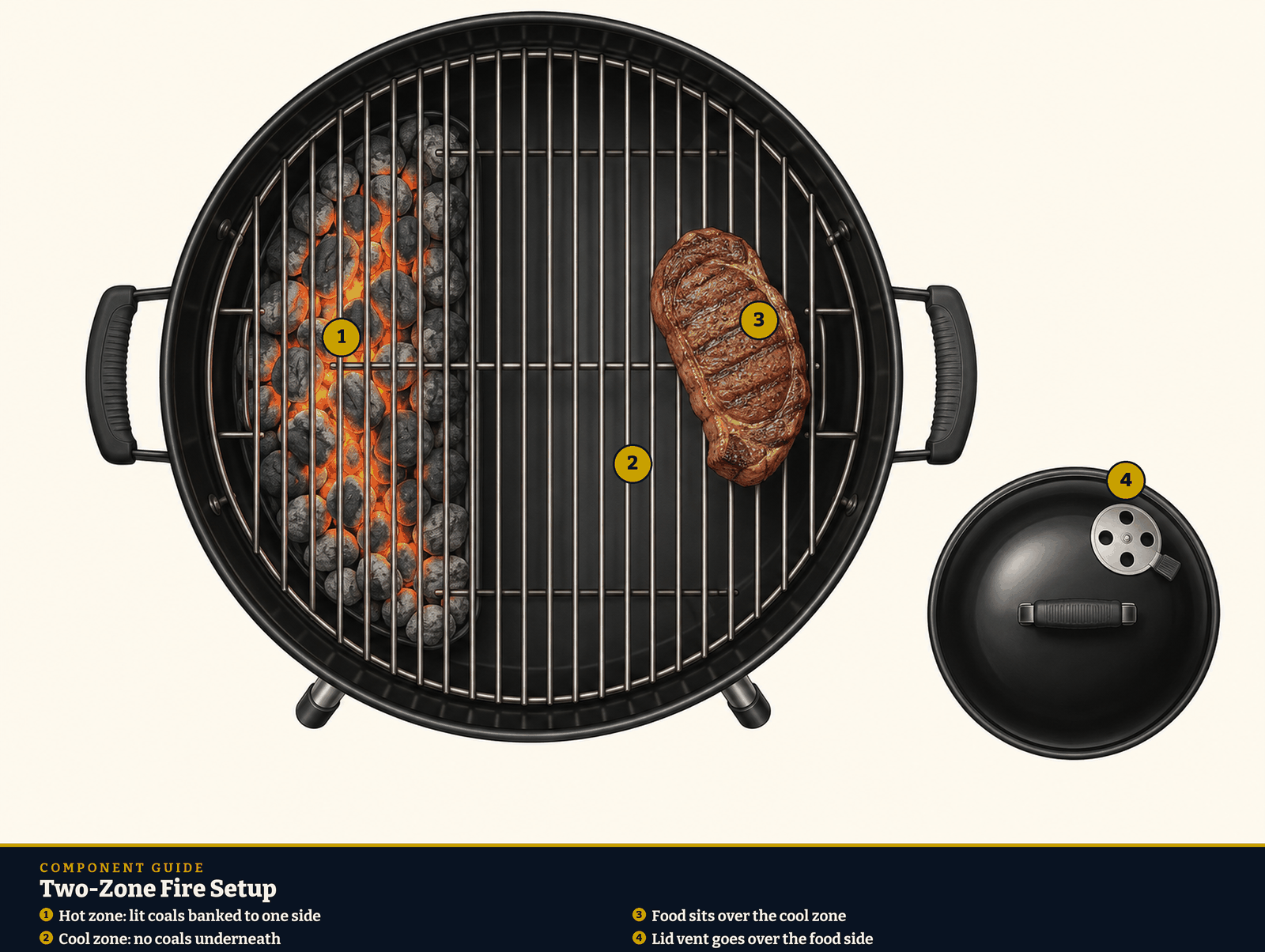
- Two-zone setup: one hot side, one cool side on the same pit
- When to use direct heat vs. indirect heat
- How to transition between zones during a cook
Put It Into Practice
- Set up your grill or smoker with a hot zone on one side and a cool zone on the other.
- Use direct heat for searing, crisping skin, and finishing — high-contact cooking that builds crust.
- Use indirect heat for smoking and roasting. For hot holding, keep cooked food at 140°F or warmer and verify it with a food thermometer.
- Map your pit's hot and cool spots with a reliable grate-level thermometer. Keep your hands away from the hot grate and rising heat.
- Use the two-zone setup to control doneness — move meat to the cool zone to slow the cook, the hot zone to speed it up.
- Practice with chicken thighs. Cook them to at least 165°F internal, verified in the thickest part, then use brief direct heat for crisp skin while watching for flare-ups.
Mr. B's Pitmaster Note
Most beginners use only one zone — all direct or all indirect. The two-zone setup is the single biggest upgrade you can make to your backyard cooking. Once you understand it, almost every other technique becomes easier.
Use your equipment manufacturer's instructions, keep the cooker outdoors on a stable noncombustible surface, and verify food temperatures with a calibrated thermometer.